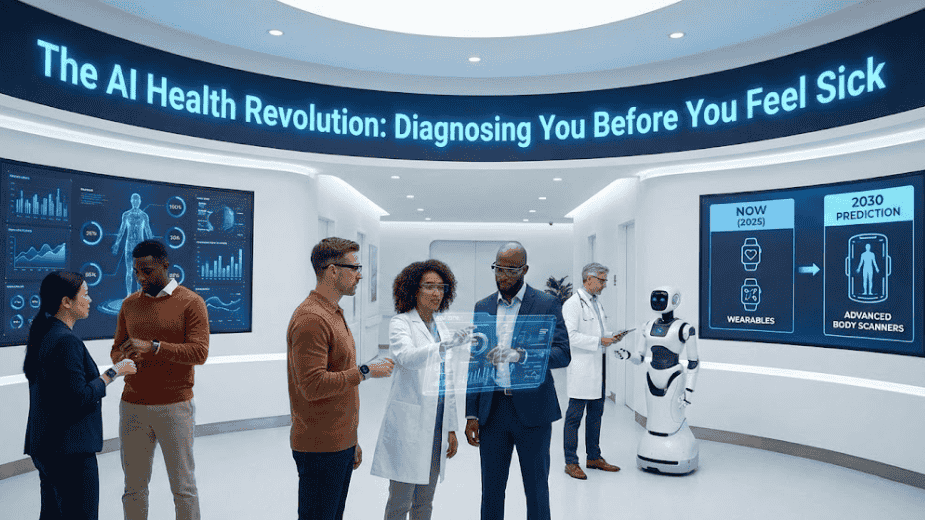
Market Growth and Adoption
- The global AI in healthcare market is rapidly expanding, driven by diagnostics, imaging, genomics, and preventive tools. It was valued at approximately $26.6 billion in 2024 and is projected to grow significantly by 2030.
- The AI diagnostics segment alone may reach about $8.54 billion by 2033.
- Around 87% of healthcare organizations are using or plan to use AI tools soon.
- Nearly 66% of physicians reported using AI in their clinical work in 2024-a sharp rise from past years.
Diagnostic Accuracy & Early Detection
- AI systems can detect diseases such as cancer or diabetic retinopathy with up to ~95% accuracy in specific settings.
- AI-supported breast cancer screening reduced later diagnoses by 12% compared to standard methods in a major trial.
- Some AI algorithms can predict patient deterioration hours or days before symptoms emerge with high accuracy.
- Predictive AI models have been developed to estimate susceptibility to over 1,000 diseases decades in advance.
Efficiency and Cost Impacts
- AI can reduce diagnostic errors by up to 40% compared to traditional approaches.
- Savings from early and accurate AI diagnosis could exceed $150 billion annually by 2026 through fewer misdiagnoses and more effective treatment distribution.
- AI reduces imaging analysis time (e.g., MRI/CT scans) substantially – in some reports by up to 40–90%.
Clinical Usage Today
- More than 70% of healthcare organizations use AI tools for clinical decision support or medical imaging tasks.
- 60–74% of hospitals now use AI for radiology or predictive risk assessment.
- AI-enabled devices account for over 75% of all AI tools used in hospital diagnosis, particularly in radiology.
Future Projections (2025-2030)
- The AI healthcare diagnostics market is projected to grow even faster through the end of the decade.
- By 2030, AI health systems could flag conditions years before symptoms, helping personalize care plans.
- AI integration into routine clinical workflows may exceed 80% in advanced hospitals by 2030.
1. Introduction: A New Era in Healthcare
Healthcare is shifting rapidly from reactive treatment – waiting until someone gets sick – to proactive, predictive care that identifies health risks before symptoms even appear. This shift is powered by artificial intelligence (AI), machine learning, and digital technologies that can analyze huge amounts of medical data and detect patterns humans might miss. With predictions ranging from future heart risk to early cancer signs, AI is transforming how we understand illness, health, and prevention.
Today’s healthcare system often reacts to disease – a patient feels symptoms, visits a clinician, undergoes tests, and receives a diagnosis. With AI, however, we can continuously monitor health signals and detect signs of disease much earlier, greatly improving outcomes, lowering costs, and reducing suffering.
This article explores the current state of AI predictive diagnostics, how it works, its challenges, and what the health landscape might look like by 2030.
2. What Does “Diagnosing Before You Feel Sick” Actually Mean?
Diagnosing illnesses before symptoms occur refers to predictive healthcare – using data and advanced analytics to identify individuals at risk of developing disease in the future. Unlike traditional medicine that waits for symptoms, predictive AI systems look for complex signals hidden in medical images, wearable data, genetics, electronic health records, and other sources. This allows doctors and AI tools to act earlier, potentially preventing disease altogether.
At its core, predictive healthcare blends:
- Machine learning algorithms that spot patterns invisible to clinicians
- Big data sources including health records, wearables, genomics
- Real-time monitoring systems that continually evaluate an individual’s health status
By constantly analyzing these inputs, AI can issue warnings, tailor preventive plans, and help doctors intervene sooner.
3. How AI Is Diagnosing the Undiagnosed – Right Now
Artificial intelligence is already proving its value in early diagnosis across many areas of medicine.
3.1 Wearables and Smart Devices
Wearable technology like smartwatches can now track heart rate, sleep patterns, oxygen levels, and other health signals. Advanced AI models can analyze this data to detect subtle anomalies. For example, research shows that smartwatch data combined with AI can reveal structural heart abnormalities like weakened heart muscle or damaged valves, something previously only possible with hospital-grade equipment.
3.2 AI in Medical Imaging
Machine learning systems are being used to read X-rays, MRIs, and mammograms – often identifying early signs of disease that a human might miss. A large trial published in The Lancet found that AI-assisted breast cancer screening improved early cancer detection and reduced delayed diagnoses by around 12%.
3.3 AI-Powered Diagnostic Tools
New diagnostic hardware like AI-enhanced stethoscopes can analyze heart and lung sounds in seconds, spotting conditions such as heart valve disease or atrial fibrillation far earlier than traditional tools.
3.4 Data Integration and Prediction Models
Researchers have developed advanced AI models capable of predicting susceptibility to over 1,000 diseases decades before they manifest by analyzing large health record databases.
These innovations signal a shift from reactive medicine to systems that predict risks and intervene early, improving outcomes for patients worldwide.
4. What Powers Predictive AI in Healthcare? (The Technology Behind It)
Predictive diagnostics rely on several key technological pillars:
4.1 Big Data and Machine Learning
AI learns from vast datasets – health records, imaging, wearable signals, lab results, and demographic data – to recognize patterns linked with disease risk. The larger and more diverse the data, the better the predictive accuracy.
4.2 Predictive Models and Algorithms
Sophisticated algorithms such as gradient boosted trees, neural networks, and ensemble methods like XGBoost are trained to identify risk patterns. Research shows models built from routine blood tests and demographic data can detect cancer and cardiovascular disease risks before symptoms arise.
4.3 Digital Twins
One of the most exciting future tools is the digital twin – a virtual model of a patient that simulates their biological behavior. Digital twins can predict how a disease might progress and how an individual might respond to treatments, enabling truly personalized medicine.
4.4 Multi-Modal AI Platforms
AI systems like IBM’s Health Guardian integrate data from wearables, voice, video, and clinical inputs to evaluate a patient’s health comprehensively, expanding beyond traditional approaches.
These technologies work together to create a healthcare system capable of spotting disease much earlier and more accurately than ever before.
5. Key Applications of Predictive AI Today
5.1 Early Detection of Chronic Diseases
AI tools analyze patterns that signal long-term conditions like diabetes, hypertension, and heart disease before they cause symptoms. Data from wearables and EHRs can help doctors identify risk and take action early.
5.2 Cancer Screening and Risk Prediction
By learning patterns from mammograms and blood tests, AI can help flag early cancer signs at stages when treatment is more effective.
5.3 Cardiovascular Risk Assessment
Smart technologies paired with AI enhance heart risk prediction, enabling earlier lifestyle or medical interventions.
5.4 Personalized Preventive Plans
AI can tailor interventions based on a person’s unique health profile, including genetics, lifestyle, and environmental exposures.
6. Benefits of Predictive AI in Healthcare
6.1 Early Intervention and Better Outcomes
Detecting diseases before symptoms appear means treatments can be less invasive and more effective. Early diagnosis often leads to better survival and quality of life.
6.2 Reduced Healthcare Costs
Early detection prevents expensive hospital stays, invasive treatments, and emergency care, lowering the burden on health systems.
6.3 More Personalized Care
AI enables individualized treatment plans tailored to each patient’s biological and lifestyle factors.
6.4 Faster, More Accurate Diagnosis
AI can analyze vast amounts of data quickly and with high accuracy, reducing diagnostic delays and human error.
6.5 Increased Healthcare Access
In regions with shortages of specialists, AI tools can extend diagnostic capabilities to remote and underserved areas.
7. Challenges and Risks
Despite its promise, AI adoption in predictive healthcare faces several hurdles:
7.1 Data Privacy and Security
AI systems require vast amounts of sensitive health data, raising concerns about patient privacy, consent, and the potential for data breaches.
7.2 Data Quality and Integration
Medical data are often fragmented and inconsistent, making it hard for AI models to work reliably.
7.3 Explainability and Transparency
Many AI models function as “black boxes,” and clinicians may not understand how they reach decisions – a major concern in medical contexts.
7.4 Regulatory and Ethical Barriers
Governments are still developing regulations around AI in healthcare – including liability, ethics, and safety standards.
7.5 Health Disparities and Bias
If AI is trained on biased or non-diverse data, its predictions may be inaccurate for certain populations, perpetuating inequalities.
Addressing these challenges is critical for safe, widespread deployment of AI in health systems.
8. The Role of Doctors and Humans in AI-Driven Healthcare
It’s important to stress that AI doesn’t replace clinicians – it augments them. Doctors interpret AI insights, contextualize them with clinical judgment, and make final decisions. The future of healthcare will likely be a human-AI partnership, where AI handles data analysis at scale and humans provide empathy, reasoning, and ethical oversight.
9. What AI Health Predictive Systems Will Look Like by 2030
Experts predict dramatic advancements over the next decade. By 2030, AI is expected to:
9.1 Continuous Remote Monitoring
Wearables and smart sensors will monitor health in real time, feeding data into predictive models to spot trends long before disease becomes clinical.
9.2 Digital Twins in Routine Care
Digital twin technology could become standard in managing chronic diseases, tailoring treatments, and anticipating disease progression.
9.3 Hyper-Personalized Medicine
AI will combine genomics, lifestyle factors, and environmental exposure to create individualized care plans for prevention and treatment.
9.4 Autonomous Clinical Decision Support
AI may offer real-time decision support during clinical encounters, enhancing efficiency and accuracy.
9.5 Predictive Population Health
Healthcare systems will use AI to identify at-risk populations, plan interventions, and allocate resources more effectively.
These innovations suggest a future where AI not only detects disease early but helps prevent it entirely.
10. Ethical and Societal Considerations
With great power comes great responsibility. As AI becomes more integrated into healthcare:
- Who owns your health data?
- How should consent be handled?
- What safeguards protect against discrimination based on AI risk prediction?
Ensuring transparency, fairness, and human oversight will be essential as predictive health technologies evolve.
Conclusion: From Sick Care to Smart Care
The AI health revolution is transforming medicine from a reactive endeavor to a predictive, personalized, and proactive system. With AI’s ability to analyze data at unparalleled scale, detect risks early, and tailor interventions, the future of healthcare promises better outcomes, lower costs, and healthier lives. While challenges remain – particularly around ethics and data privacy – the potential benefits of diagnosing disease before symptoms appear are profound.
As we move toward 2030, AI will not just support healthcare – it will help shape it.
References & Further Reading
Here are links where you can explore some of the facts mentioned:
- AI reduces later cancer diagnoses in screening programs – The Guardian / Lancet trial: https://www.theguardian.com/science/2026/jan/29/ai-use-in-breast-cancer-screening-cuts-rate-of-later-diagnosis-by-12-study-finds
- AI stethoscopes diagnosing heart conditions in seconds: https://www.theguardian.com/technology/2025/aug/30/doctors-ai-stethoscope-heart-disease-london
- AI predicts disease susceptibility decades ahead: https://www.ft.com/content/598e07ec-954f-49b7-9bc5-ce77f9fff934
- Challenges in implementing AI predictive analytics: https://getondata.com/ai-predictive-analysis-in-healthcare/
- Digital twin technology in healthcare: https://journalofbigdata.springeropen.com/articles/10.1186/s40537-025-01280-w
- Future predictions for AI healthcare by 2030: https://www.eicta.iitk.ac.in/knowledge-hub/artificial-intelligence/future-of-ai-in-healthcare-predictions-innovations-2030