Contracts are an important part of every business. They define agreements between companies, employees, vendors, clients, and partners. Managing contracts properly helps businesses stay organized, avoid legal issues, and track important deadlines.
Many businesses still manage contracts using spreadsheets, emails, or paper files. This method often creates problems. Contracts get lost. Renewal dates are missed. Important terms are forgotten. This can lead to financial loss and compliance risks.
This is why contract management software has become essential for modern businesses. These tools help companies create, organize, track, review, and renew contracts more efficiently.
But not all contract management software is the same. Different tools are designed for different business needs. Some focus on storage, while others provide advanced automation and analytics.
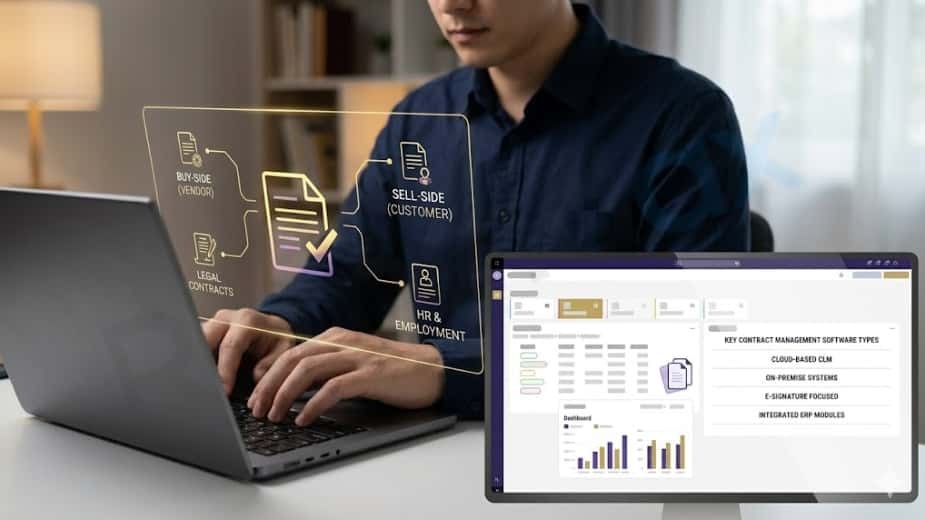
In this guide, we will explain the main types of contract management software you should know before choosing the right solution for your business.
1. Basic Contract Storage Software
Basic contract storage software is the simplest form of contract management system.
Its main purpose is to store contracts in one secure digital location. Instead of keeping files in email inboxes or local folders, businesses can upload all contracts into one organized platform.
Key Features
- Digital contract storage
- Search functionality
- Folder organization
- Document tagging
- Basic access control
Benefits
This software makes it easier to find contracts quickly. Employees can search by contract name, date, client, or category.
It also reduces the risk of losing important documents.
Best For
- Small businesses
- Startups
- Companies with fewer contracts
This type of software is a good starting point for businesses that want simple organization without advanced features.
2. Contract Lifecycle Management (CLM) Software
Contract Lifecycle Management software is one of the most complete contract solutions available.
It manages the entire contract process from start to finish.
This includes:
- Contract creation
- Drafting
- Internal approvals
- Negotiation
- Execution
- Monitoring
- Renewal or termination
Key Features
- Workflow automation
- Approval routing
- Deadline tracking
- Contract version control
- Audit trails
Benefits
CLM software reduces manual work and keeps every stage of the contract process organized.
It helps businesses avoid delays and improves visibility across departments.
For example, if a contract needs legal approval, the software automatically sends it to the correct person.
Best For
- Medium to large businesses
- Organizations with high contract volume
- Companies needing process control
CLM software is ideal for businesses that want complete contract oversight.
3. Document Automation Software
Creating contracts manually takes time.
Document automation software solves this problem by generating contracts automatically using pre-built templates.
Users simply enter required details like:
- Client name
- Pricing
- Terms
- Dates
The system then creates a ready-to-use contract.
Key Features
- Contract templates
- Auto-fill fields
- Clause libraries
- Dynamic document generation
Benefits
This software improves speed and reduces errors.
It also ensures consistency across all contracts.
Instead of drafting each agreement from scratch, teams can create professional contracts in minutes.
Best For
- Sales teams
- HR departments
- Legal teams
Businesses that create contracts frequently benefit greatly from automation.
4. E-Signature Software
Contract signing is often one of the slowest parts of the process. Printing, scanning, and emailing signed documents can waste valuable time. E-signature software allows contracts to be signed electronically. Users can sign documents from any device, anywhere.
Key Features
- Digital signatures
- Secure authentication
- Signature tracking
- Completion notifications
- Legally compliant signing
Benefits
This software speeds up contract completion.
It improves convenience for both businesses and clients.
It also provides secure proof of signing activity.
Best For
- Remote businesses
- Sales teams
- Service-based companies
E-signature tools are essential for fast-moving businesses.
5. AI-Powered Contract Management Software
Artificial intelligence is changing contract management. AI-powered software can review contracts automatically and identify important information.
It can detect:
- Risky clauses
- Missing terms
- Compliance issues
- Renewal obligations
Some tools can even summarize long contracts in seconds.
Key Features
- Clause analysis
- Risk detection
- Smart recommendations
- Automated extraction
- Contract comparison
Benefits
AI reduces the time needed for contract review. It also helps businesses identify hidden risks before signing. This improves decision-making and reduces legal exposure.
Best For
- Enterprises
- Legal departments
- Businesses handling complex contracts
AI-powered systems are becoming more valuable as contract volumes grow.
6. Compliance and Risk Management Software
Many contracts include legal obligations and deadlines.
Missing these requirements can lead to:
- Penalties
- Legal disputes
- Reputation damage
Compliance-focused contract software helps businesses stay on track.
Key Features
- Compliance tracking
- Risk alerts
- Obligation monitoring
- Audit reporting
- Renewal notifications
Benefits
This software ensures businesses meet all contractual obligations. It sends reminders before important deadlines. Solutions like Remindax are useful for tracking renewals and ensuring no important contract dates are missed.
Best For
- Regulated industries
- Healthcare
- Finance
- Government contractors
This software helps reduce legal and financial risks.
7. Contract Analytics Software
Data is valuable. Contract analytics software helps businesses extract insights from contract data. Instead of just storing agreements, it analyzes them.
Key Features
- Reporting dashboards
- Performance tracking
- Renewal analysis
- Contract trend reports
- Financial insights
Benefits
Businesses can use analytics to make better decisions.
For example, they can identify:
- Contracts that cost too much
- Vendors with poor terms
- Frequently renewed agreements
This supports smarter planning.
Best For
- Data-driven organizations
- Procurement teams
- Finance departments
Analytics software turns contracts into strategic business assets.
8. Industry-Specific Contract Management Software
Some industries have special contract requirements. Generic software may not always meet those needs. Industry-specific contract management software is designed for particular sectors.
Examples
Healthcare
Tracks compliance with patient and regulatory requirements.
Real Estate
Manages lease agreements and property contracts.
Legal Firms
Supports legal review workflows.
Construction
Tracks project contracts and subcontractor agreements.
Benefits
These tools include specialized features that fit industry workflows.
This improves efficiency and reduces customization needs.
Best For
Businesses with highly specific contract processes.
9. Cloud-Based Contract Management Software
Cloud-based software stores contracts online. Users can access contracts from any internet-connected device. This has become increasingly important as remote and hybrid work grows.
Key Features
- Online access
- Real-time collaboration
- Automatic backups
- Remote sharing
- Secure cloud storage
Benefits
Cloud solutions improve flexibility. Teams in different locations can work together easily. They also reduce IT infrastructure costs.
Best For
- Remote teams
- Growing businesses
- Multi-location companies
Cloud-based software offers convenience and scalability.
10. Integrated Contract Management Platforms
Some businesses need more than contract management. They need software that connects with other business systems. Integrated platforms combine contract management with tools like:
- CRM systems
- ERP platforms
- Procurement software
- Compliance systems
Key Features
- Third-party integrations
- Centralized workflows
- Data syncing
- Cross-platform reporting
Benefits
This eliminates duplicate work. Information flows automatically between systems.
For example, when a customer deal closes in CRM, the contract can be generated instantly.
Best For
- Large businesses
- Complex operations
- Companies using multiple software tools
Integrated platforms create a connected business environment.
How to Choose the Right Contract Management Software
Choosing the right software depends on your business needs.
Ask yourself these questions:
How many contracts do you manage?
A small business may only need storage software. A large enterprise may need full CLM.
Do you need automation?
If contract creation takes too much time, document automation is valuable.
Is compliance important?
Regulated industries need strong compliance tracking.
Do you work remotely?
Cloud-based solutions offer better accessibility.
Do you need integration?
If you already use CRM or ERP systems, integration matters.
The best solution is one that fits your workflow and future growth.
Final Thoughts
Contract management is no longer just about storing documents. Modern businesses need smarter tools to manage contracts efficiently.
There are many types of contract management software available, each designed for specific needs. From basic storage systems to AI-powered analytics platforms, every solution offers unique benefits.
The right choice depends on your business size, industry, contract volume, and operational goals.
By understanding these different software types, businesses can make better decisions and improve efficiency, compliance, and control over every contract they manage.