
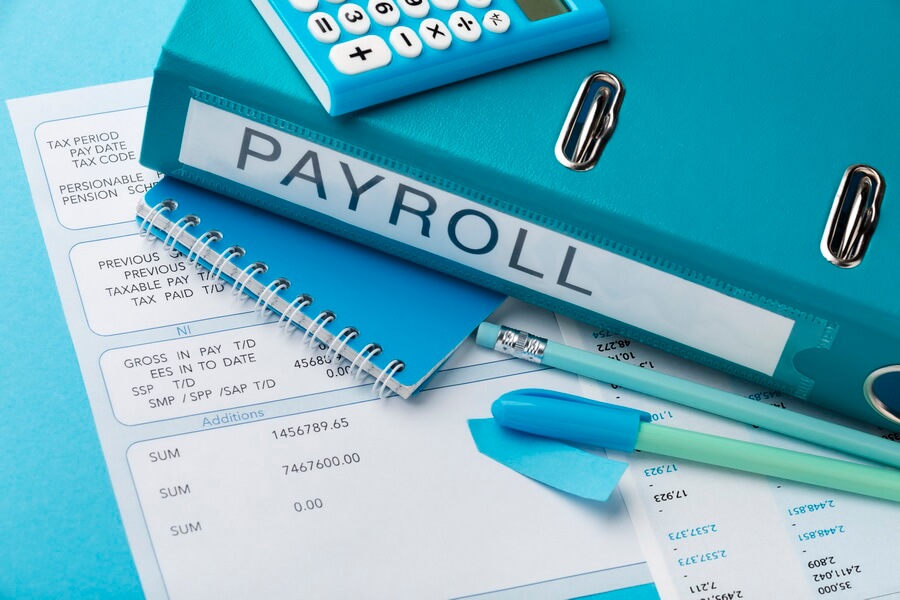
On a public-works job, the paperwork that most directly controls whether you get paid isn't the invoice — it's the certified payroll. Prevailing-wage laws require contractors and subcontractors on government-funded construction to pay set wage rates and, crucially, to prove it every single week: a certified payroll report, submitted for each week work is performed, in which someone certifies under penalty the wages and hours paid to each worker. The enforcement is what makes it bite. On many projects, a contractor's payment can be withheld until the required certified payrolls are on file — so a report that's late or missing doesn't just risk a citation, it freezes the money.
And it stacks up the chain: a general contractor usually can't complete its own weekly submission until it has collected certified payrolls from every subcontractor on site that week, so one sub who's behind can hold up everyone. Multiply a weekly deadline across every active project and every sub, and the reports become a relentless, easy-to-fall-behind obligation. Here's how certified payroll works to track, and how to keep every week filed.
This is general information, not legal or payroll advice — wage rules and forms come from your agency or counsel.
1. What is certified payroll?
Certified payroll is the weekly reporting required on public-works projects covered by prevailing-wage laws (federal Davis-Bacon and state equivalents). For each week work is performed, contractors and subcontractors submit a report — often on a standard form — certifying, under penalty, the wages and hours paid to each worker at the required rates. General contractors typically also collect their subcontractors' certified payrolls. Because the wage rules and forms are jurisdiction-specific, those come from the agency or counsel. Remindax helps you track which certified payrolls are due, submitted, and outstanding, per project and week, and reminds you; it does not calculate wages, prepare, or file the reports.
There's something worth naming early about this obligation: unlike a license or a permit, there is no document sitting in a drawer that's "current" or "expired." The requirement is the act of reporting itself, and it renews every week. Most of what a construction business tracks — a contractor license, a building permit, an insurance certificate — is a standing document with a renewal date. A certified payroll is closer to a heartbeat: each week of work on a covered project must produce one, and the question is never "is it still valid?" but "has this week's report been filed yet — by us, and by every sub?"
1.1 The reporting cadence
Four properties define the rhythm, and together they explain why this becomes a tracking problem rather than a filing chore:
- →Weekly — a certified payroll for each week work is performed, for as long as the project runs.
- →Per project, per contractor — each covered project and each subcontractor on it reports separately, so the count multiplies fast.
- →Certified under penalty — a responsible party attests to the wages and hours paid, which makes accuracy a liability question, not just a bookkeeping one.
- →Collected up the chain — general contractors gather their subs' certified payrolls before their own submission is complete.
If the collection dynamic sounds familiar, it's because construction has a close cousin: lien waiver tracking. Both are documents that gate payment, and both have a general contractor chasing every sub for paperwork before money moves. The difference is the clock. Lien waivers are exchanged per payment — a fresh set each pay cycle, tied to a draw. Certified payroll runs per week, tied to the calendar of work performed, whether or not a payment is happening that week. A GC on a public-works job is usually running both collections at once, on the same subs, on two different clocks.
2. How often is certified payroll due?
Weekly — a certified payroll report for each week work is performed on a covered project.
A missing or late filing is itself a violation — not just a gap in the records.
On many projects, the contractor's payment is held until the required certified payrolls are filed.
General contractors collect every sub's report each week before their own submission is complete.
The withholding lever is what sets certified payroll apart: the weekly report isn't just compliance paperwork — on many projects, the money doesn't move until it's filed. That changes the character of the deadline. A late license renewal exposes you to a fine that may or may not arrive; a late certified payroll can stop a payment that was otherwise ready to go. And because the cadence is weekly, a slipped report doesn't stay in the past — it sits between you and this week's draw until someone notices and files it.
It's also worth being precise about what "due weekly" multiplies into. A subcontractor working three covered projects owes three reports a week. A general contractor with twelve subs on one project is waiting on twelve reports a week — plus its own — before its submission is complete. Neither number is large in isolation; the difficulty is that the count resets every Monday, indefinitely, for the life of every covered project.
3. Why tracking certified payroll matters
Four properties combine to make the weekly report one of the highest-stakes pieces of routine paperwork on a public-works job:
Missing reports can withhold payment
On many public-works projects, the contractor's payment can be held until the required certified payrolls are filed — so a late report freezes cash flow.
It's weekly, per project
A report is due for every week work is performed on every covered project — a relentless cadence that's easy to fall behind on.
GCs depend on subs' reports
A general contractor's submission isn't complete without every sub's weekly certified payroll — one late sub holds up the chain.
Certification carries liability
Because the report is certified under penalty, accuracy and timeliness both matter — a rushed catch-up filing is its own risk.
What makes these four genuinely hard together is the arithmetic. A weekly obligation per project, per party, means the tracking question is never a single date — it's a grid: projects down one side, weeks across the top, parties within each cell, and every cell needing to reach "submitted" before the money for that period is safe. Nobody falls behind on the grid deliberately. It happens because week seventeen looks exactly like week sixteen, the person who normally files is on vacation, or a sub assumed the GC's office had it covered. The failure mode is drift, and drift is invisible until a payment stalls.
Collecting paperwork from subs will sound familiar if you also run vendor and subcontractor compliance — same parties, same chasing. But a vendor compliance file is a standing set of documents with expiry dates, kept continuously current. Certified payroll has no steady state at all: last week's report closes last week, and this week opens a new obligation from zero. One is a status you maintain; the other is a beat you must not miss — every week, on every covered job.
4. Who needs to track certified payroll
Everyone on a covered project touches the weekly reports, but each role carries a different piece of the cadence:
General contractors
Their own weekly reports plus every sub's — the party whose submission is incomplete, and whose payment is exposed, when any one report is late.
Learn More
Subcontractors
Weekly certified payrolls on every covered job to keep their own payment flowing — and to avoid being the sub who holds up everyone else's.

Construction payroll & accounting
The team that owns the certified-payroll calendar across projects — where a slipped week turns directly into a held payment.
Learn More
Public agencies & program managers
Confirming the required reports are on file before releasing payment — the party the withholding lever exists to protect.

Project & office managers
The person actually chasing the outstanding weekly reports — tracking which subs have filed and which are holding up this week's set.
Learn MoreNotice how many of these roles are simultaneously filing and collecting. A general contractor submits its own report and gathers a dozen more. A subcontractor with lower-tier subs is doing the same thing one level down. That's why a single shared view of "which weeks are filed, which are outstanding, and from whom" is worth more than a folder of submitted forms — the folder tells you what went in, and the thing that holds up money is what hasn't.
5. What happens when a certified payroll is missed
Certified-payroll failures show up, like lien-waiver failures, as money that won't move — but on a weekly clock. When the required certified payrolls for a period aren't on file, the agency or the paying party can withhold the contractor's payment until they are, so a report that slipped last week can hold up this week's draw. Because the reports are certified under penalty, there's a compliance edge too: a missing, late, or inaccurate certified payroll is a violation in its own right, and repeated or willful failures on prevailing-wage work can escalate to more serious consequences, including effects on a contractor's ability to win future public work.
The chain dynamic makes it worse — a general contractor can be fully current on its own reporting and still have its submission held up because one subcontractor didn't turn in its weekly certified payroll, so the GC ends up chasing subs every week to protect its own payment. And the cadence is unforgiving: the deadline comes back every single week, on every active covered project, so falling behind compounds fast. Tracking which certified payrolls are due, submitted, and outstanding — per project, per week, per party — is what keeps the reports filed and the payments moving.
Most compliance failures are a single date passing unnoticed. This one is a rhythm breaking. Miss one week and you don't just have one late report — you have a gap that sits in front of every subsequent payment until it's cured, plus this week's report still due on schedule. That's why catch-up is harder than staying current: the obligation doesn't pause while you recover. A tracking system for certified payroll has to think in recurring weeks per project, not in one-off expiry dates.
6. How Remindax keeps every week's reports on file
Your agency sets the wage rules and the forms; your payroll team prepares the reports. The operational problem left over is knowing, for every covered project and every week, which certified payrolls are filed and which are still outstanding — and reminding the right people before the deadline. That's the part Remindax does:
Every project's weekly reports in one view
Which certified payrolls are due, submitted, and outstanding — per project, week, and party — with status at a glance instead of an email search.
Weekly reminders
Recurring alerts to file your own certified payroll and to chase subs' reports before the deadline — by Email, SMS, and WhatsApp.
Recurring by design
Set the weekly cadence per covered project once, and each week's set is tracked without rebuilding it by hand.
Organized records
Keep the submitted reports organized per project and week, so the documentation behind any period can be produced for the agency or an audit.
Remindax tracks the submission dates and status and reminds the right people. It doesn't calculate prevailing wages, prepare or file certified payrolls, determine wage rates, or provide payroll or legal advice — those come from your agency, payroll team, or counsel. For the teams that carry this alongside every other dated obligation, see finance compliance tracking — tracking and reminders, not accounts receivable or collections — and compliance tracking software for the wider obligation set.
7. Why spreadsheets fail for certified payroll tracking
Certified payroll is a weekly, per-project, multi-party reporting obligation with payment riding on it — and a spreadsheet can't keep pace with a deadline that resets every week across every job and every sub. It won't remind you to file this week's report, won't show which subs are still outstanding before the GC's submission is due, and won't roll a portfolio of covered projects into one view. Because a missing report can withhold payment, the stakes of the slip are immediate cash flow. And since it resets weekly, a manual tracker is perpetually being rebuilt.
An automated system holds each project's weekly certified-payroll cadence, flags what's outstanding versus submitted per party, and reminds the right people to file and collect before the deadline — so the reports stay current and the payments keep moving.
- ✗Silent — never volunteers that two projects are a week behind on filings
- ✗Shows what was entered, not which subs are still outstanding this week
- ✗Has to be extended by hand every week, for every covered project
- ✗Can't chase anyone — every follow-up is a manual email someone must remember
- ✗Gaps surface when a payment is already held, not before the deadline
- ✓Due, submitted, and outstanding per project, week, and party — at a glance
- ✓Weekly cadence set once per project — each week's set appears automatically
- ✓Reminders reach both sides — file your own, chase the subs still outstanding
- ✓A whole portfolio of covered projects rolls up into one view
- ✓Gaps surface early, while there's still time to file before payment is held
8. Key takeaways
- ✓Certified payroll is weekly reporting required on public-works projects under prevailing-wage laws (federal Davis-Bacon and state equivalents).
- ✓For each week work is performed, contractors and subs certify, under penalty, the wages and hours paid.
- ✓On many projects, the contractor's payment can be withheld until the required certified payrolls are filed.
- ✓General contractors depend on collecting every sub's weekly report, so one late sub can hold up the chain.
- ✓Tracking which certified payrolls are due, submitted, and outstanding per project and week keeps the reports filed and payments moving — Remindax tracks the cadence, it doesn't calculate wages or file reports.
Never let a missing report hold up your payment
Track every certified payroll, every week — automatically. (You use your forms; we track the cadence.) Whether you're a sub filing your own weekly reports or a GC collecting a set from a dozen subs, Remindax holds the grid, flags what's outstanding, and reminds the people who still owe a report.
GDPR-ready · AWS secure cloud · Encrypted storage · Setup in under 5 minutes
General information, not legal or payroll advice — use your agency's wage rules and forms.
9. Frequently Asked Questions
Typically weekly - a certified payroll report for each week work is performed on a covered public-works project - with the exact requirements set by the governing law and agency.
A report submitted on prevailing-wage projects certifying, under penalty, the wages and hours paid to each worker at the required rates.
On many projects yes - the paying party can withhold payment until the required certified payrolls are on file, so a late report can freeze cash flow.
Because a general contractor's submission generally isn't complete without each subcontractor's weekly report, so one late sub can hold up the whole chain.
The reports are required, so missing, late, or inaccurate ones are violations that can withhold payment and, if repeated or willful, escalate to more serious consequences.
No - Remindax tracks which certified payrolls are due, submitted, and outstanding and reminds you. Wage rates, forms, and filing come from your agency, payroll, or counsel.
Yes - each covered project's weekly reports, by party, with outstanding-vs-submitted status and reminders.
Yes - a forever-free plan, no credit card required.