
1. What Is CPR Certification?
CPR (cardiopulmonary resuscitation) is a life-saving technique used when someone's heart stops beating or they stop breathing. When administered promptly and correctly, CPR can dramatically improve survival rates from cardiac arrest, which claims hundreds of thousands of lives in the United States every year. CPR certification is the formal confirmation that a holder can perform these critical interventions correctly, under real-world pressure, and with current best-practice techniques.

Crucially, CPR is not a static field. Protocols and techniques are periodically updated by leading health organizations — which is one of the core reasons that certifications carry an expiration date and require periodic renewal. Holding a current certification means a practitioner is trained to the most up-to-date guidelines, not techniques that may have been revised since they last took a course.
The American Heart Association updates its CPR and Emergency Cardiovascular Care guidelines every five years, based on the latest scientific evidence. Renewal courses incorporate these revisions, which is why staying current matters beyond just ticking a compliance box.
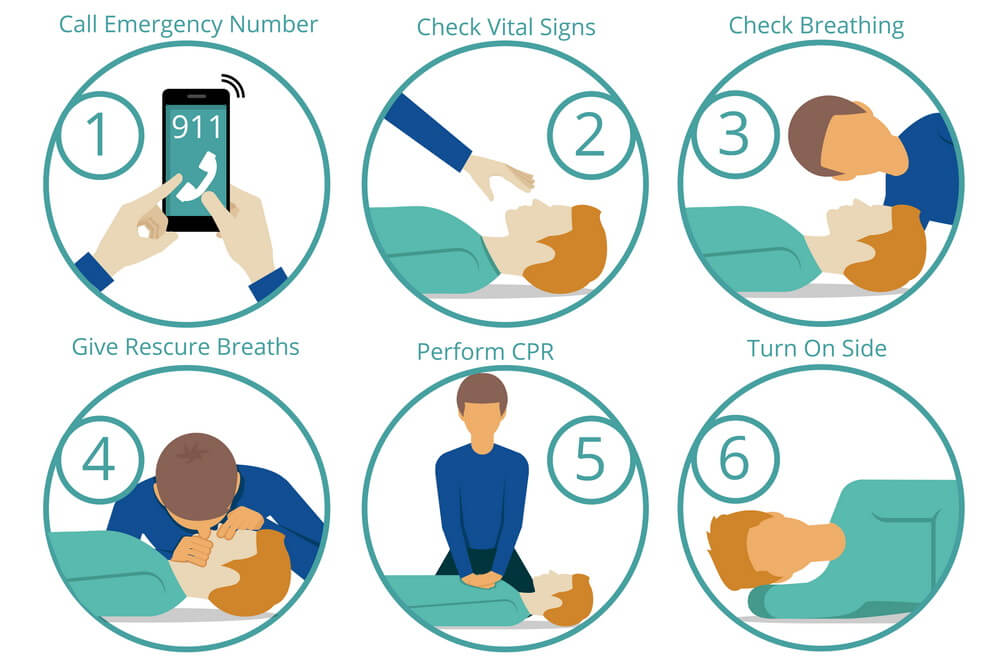
CPR certification courses typically cover chest compressions (rate, depth, hand placement), rescue breathing, recognition of cardiac arrest symptoms, how to use an AED safely, and — depending on the course level — protocols for infants, children, and adults. Some certifications also include first aid components such as bleeding control, choking response, and basic wound care.
2. Who Is Required to Have CPR Certification?
CPR certification is mandated or strongly expected across a surprisingly broad range of industries. Below are the most common professional categories, along with the specific regulatory framework that applies to each.
2.1 Healthcare Workers
Nurses, physicians, CNAs, medical assistants, dental professionals, EMTs, and paramedics — typically requiring BLS certification from AHA.
2.2 Education Professionals
Teachers, school administrators, and coaches in many states are required to maintain current CPR credentials.
2.3 Childcare Providers
Daycare staff and early childhood educators, often requiring pediatric CPR training with infant-specific techniques.
2.4 Construction Workers
OSHA standards require at least one CPR-trained responder on each job site. High-risk projects may require more.
2.5 Fitness Professionals
Personal trainers, group fitness instructors, gym staff, and aquatic facility lifeguards are all typically required to be certified.
2.6 Corporate First Responders
Designated workplace safety officers and first aid responders, particularly in industries subject to OSHA's general industry standard.
Requirements vary significantly by state, employer, and regulatory jurisdiction. Healthcare facilities must meet the standards of accrediting bodies such as The Joint Commission, which conducts regular audits of credential records. Childcare centers are typically subject to state licensing board requirements that specify both the type of CPR certification and the recertification interval. Even where certification is not explicitly mandated by law, many employers require it as a condition of employment, liability insurance, or client contract compliance.
4. How to Obtain CPR Certification
CPR certification is accessible through multiple delivery formats. The right format depends on the learner's schedule, the requirements of their employer or regulatory body, and the nature of the role they are preparing for.
Confirm which certification level and provider are accepted by your employer or regulator.
Select in-person, blended learning, or employer-arranged group training based on your needs.
Pass both the written knowledge assessment and the hands-on skills evaluation session.
Log the certification date, expiration date, and provider details in your tracking system immediately.
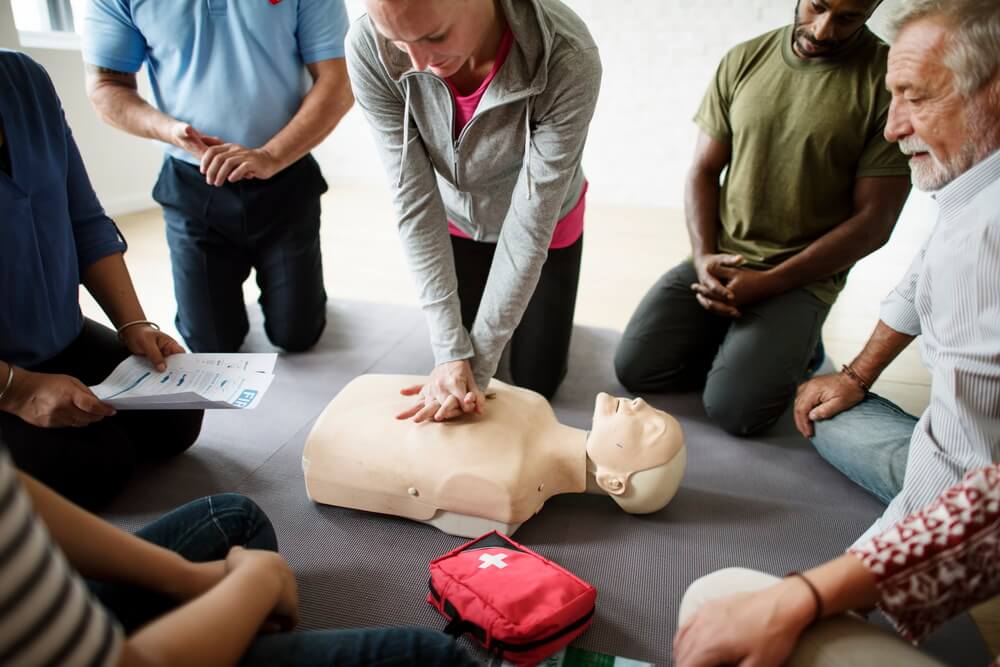
In-person classroom courses remain the most widely accepted format. They provide direct instructor feedback, immediate correction of technique errors, and the full hands-on skills assessment required by most employers and regulatory bodies. These typically run 4 to 6 hours for an initial certification.
Blended learning programs combine online coursework covering theory, protocols, and knowledge assessment with a shorter in-person skills session, often 60 to 90 minutes. These are widely accepted by most regulatory bodies and offer significant scheduling flexibility, particularly useful for organizations training large numbers of employees.
Online-only courses are available and tend to be the least expensive option, but they are generally not accepted by OSHA-regulated employers, healthcare facilities, or childcare licensing agencies. Most regulatory bodies require at minimum a hands-on skills assessment component.
OSHA and most healthcare employers require a hands-on skills assessment component as part of any acceptable CPR certification. Online-only courses do not fulfill this requirement and may leave your organization out of compliance.
5. Validity Period and Expiration Rules
The 2-Year CPR Certification Lifecycle
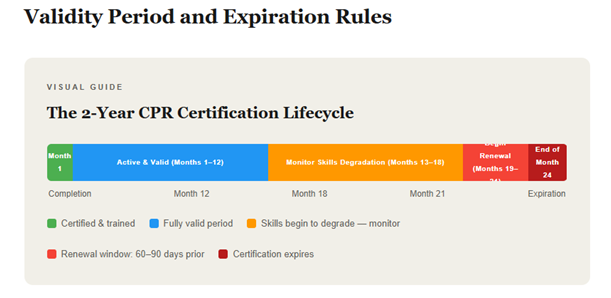
CPR certification from most major organizations, including the AHA and American Red Cross, is valid for two years from the date of completion. However, there is an important nuance to the AHA's expiration rule: certifications expire at the end of the month in which the card was issued, two years later. For example, if you complete a BLS course on March 15, your certification remains valid through March 31 two years later, not March 15. This extra grace period is intentional and allows for slightly more flexibility in scheduling renewals.
Some employers or regulatory bodies require annual refresher training even though the certification itself technically lasts two years. This is particularly common in high-risk industries such as acute care hospitals, pediatric facilities, and emergency services, where the stakes of skill degradation are highest.
6. The Skill Degradation Problem
One of the most underappreciated dimensions of CPR certification management is how rapidly skills deteriorate after training. Research in emergency medicine and resuscitation science consistently demonstrates that CPR competency declines significantly within months of initial training — long before the two-year certification expires.
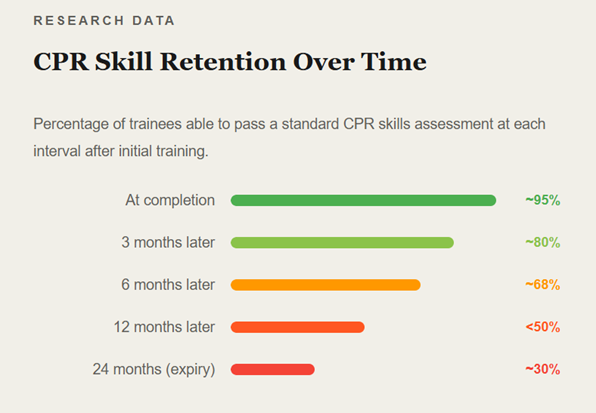
This degradation pattern has significant practical implications. Even a workforce with fully valid, up-to-date certifications may not be operationally ready to respond effectively to a cardiac emergency if those certifications are approaching the end of their validity period. This is a key reason why many high-acuity healthcare environments require annual skills refreshers, and why organizations in any sector should think beyond mere certification validity and consider training recency as a separate — and arguably more important — dimension of readiness.
7. Why CPR Certification Matters for Your Organization
7.1 Compliance and Legal Requirements
Maintaining current CPR certifications across your workforce is a direct compliance obligation in many industries. OSHA's general industry standard (29 CFR 1910.151) requires employers to have trained first aid providers on-site when medical facilities are not in close proximity. Specific OSHA standards for construction (29 CFR 1926.50), logging, and other high-risk industries go further by explicitly requiring CPR training as part of a broader first aid program.
Healthcare facilities, childcare centers, and schools face additional regulatory requirements from accrediting bodies, state licensing boards, and industry-specific standards. For a hospital, the Joint Commission's standards require that staff are competent in their roles — including emergency response — and an expired BLS certification is a direct competency gap that surveyors are trained to identify. Failing to maintain valid certifications can jeopardize operating licenses, accreditation status, and, in the worst cases, result in significant legal liability.
7.2 Operational Impact
When CPR certifications lapse, the consequences ripple across operations in ways that are often more disruptive than organizations anticipate. A nurse with an expired BLS card may be ineligible to work certain shifts, pull from the staffing pool, or participate in clinical procedures that require a certified responder present. On a construction site, a lapsed certification for the designated first aid responder can cause a project to fail its safety inspection, triggering work stoppages and penalties.
The downstream costs — emergency staffing arrangements, regulatory fines, project delays, loss of client confidence — often far exceed the cost of proactive renewal management. A certification tracking system that provides 90-day advance notice of upcoming expirations eliminates nearly all of these avoidable disruptions.
8. Common Tracking Scenarios by Industry
8.1 Hospital HR: Managing Nursing Staff
In a hospital with hundreds of nurses, tracking BLS certification dates is a constant responsibility. Each nurse renews on a different schedule, and a single lapsed certification can trigger compliance issues during Joint Commission surveys. HR teams need automated reminders well before due dates and instant audit-ready reports.
8.2 Safety Managers: Multiple Job Sites
Construction safety managers often oversee dozens of workers spread across multiple projects. OSHA requires at least one CPR-trained person on each job site. With workers rotating between locations, knowing who is certified and where they are assigned is a logistical challenge that spreadsheets fail to handle reliably.
8.3 Center Directors: Licensing Compliance
State licensing agencies require childcare staff to maintain current pediatric CPR certification. If a staff member's certification lapses, the center could face citations, fines, or even temporary closure. Directors need advance notice to schedule renewal training before deadlines arrive.
8.4 Safety Officers: OSHA Inspections
Workplace safety officers need to demonstrate at a glance — including during unannounced OSHA inspections — that all required personnel are properly certified. Being unable to produce current documentation is itself a citation risk, regardless of whether the underlying certifications are actually current.
8.5 Facility Managers: Trainer Credentials
Gyms and fitness centers typically require all trainers and front-desk staff to maintain CPR/AED certification. With high staff turnover, managers need an efficient system to track certifications for both current employees and new hires, ensuring no one works the floor with an expired credential.
8.6 Municipal Agencies: Public-Facing Staff
Parks departments, public pools, community centers, and transit authorities often require CPR certification for staff who interact with the public. Managing certifications across decentralized municipal departments requires centralized visibility that departmental-level spreadsheets cannot provide.
9. How CPR Certification Benefits Everyone
9.1 For the Organization
From a compliance standpoint, a fully certified workforce means audit readiness at all times. Organizations that can demonstrate current, documented certifications across all required roles enter regulatory inspections with confidence rather than scrambling to compile records. Beyond compliance, CPR certification reduces liability exposure by ensuring that trained responders are always available to react to medical emergencies on-site.
Operationally, a well-managed certification program eliminates the disruptions caused by lapsed credentials, unexpected staffing gaps, failed inspections, and reactive scrambles to arrange emergency training. It also functions as a reputational asset: clients, patients, and business partners in regulated industries increasingly expect — and sometimes audit — the safety posture of their service providers.
9.2 For Employees
For individual workers, maintaining current CPR certification is a tangible career asset. In many roles — nursing, teaching, personal training, lifeguarding — it is an absolute prerequisite for employment. In others, it differentiates a candidate in a competitive field and opens doors to higher-responsibility roles. Beyond career advancement, employees who are trained and certified are meaningfully better prepared to act whether the emergency happens at work, at home, or in public.
9.3 For Clients and the Public
Organizations whose staff maintain current emergency certifications build justified trust with the people they serve. In healthcare, it is a baseline expectation. In childcare, it is a primary source of parental confidence. In corporate and fitness environments, it signals that the organization takes its duty of care seriously — not just as a compliance matter, but as a genuine commitment to the wellbeing of everyone in its spaces.
10. How to Track CPR Certification Expiration Dates Effectively
Tracking CPR certification expiration dates may seem manageable when you have a small team, but as your organization grows, complexity compounds quickly. The shift from manual to systematic tracking is one of the highest-leverage improvements a compliance or HR team can make.
10.1 The Limits of Manual Tracking
Most organizations begin with spreadsheets. For a team of five to ten people, a well-maintained spreadsheet with calendar reminders can function adequately. As the team grows past twenty or thirty people, however, the cracks appear. Common failure modes include data entry errors that leave expiration dates incorrect or missing, no automated reminder system so expirations are only noticed after the fact, difficulty generating audit-ready reports under time pressure, and the risk of records being lost or corrupted when staff members change roles or leave the organization.
The most insidious problem with spreadsheet-based tracking is that it requires someone to actively maintain it. When that person is on leave, transitions to a new role, or simply has a busy week, the system degrades. In compliance contexts, a system that only works when actively tended is a liability, not an asset.
11. Using Remindax for Automated CPR Certification Tracking
11.1 Remindax: Automated Certification Expiration Tracking
Remindax is purpose-built for organizations that need to track credential expiration dates at scale — including CPR certifications. It centralizes all certification records in a single secure dashboard and proactively notifies both managers and employees before deadlines arrive.
- ✓Automated expiration reminders
- ✓Centralized certification dashboard
- ✓Instant audit-ready reports
- ✓Customizable alert intervals
- ✓Multi-location support
- ✓Employee self-service updates
11.2 Benefits of Automated Tracking
An automated expiration tracking system eliminates the core vulnerabilities of manual approaches. With Remindax, every CPR certification record is stored centrally and indexed by employee, role, location, certification type, and expiration date. The system proactively sends reminders to both managers and individual employees at customizable intervals — for example, at 90 days, 60 days, and 30 days before expiration.
The operational benefits compound as organizational size increases. A hospital HR director managing 400 nurses no longer needs to manually cross-reference a spreadsheet with a calendar. A construction safety manager overseeing eight job sites can pull a real-time view of every worker's certification status and see, at a glance, which sites have sufficient certified coverage for the coming weeks.
Configure Remindax to send the first renewal reminder 90 days before expiration. This gives employees enough time to find a course, handle scheduling conflicts, and complete training before their certification lapses — even during peak seasons when training slots fill up quickly.
11.3 What to Look for in a Certification Tracking System
When evaluating tools for CPR certification tracking, the key capabilities to assess are automated reminder delivery (not just passive reporting), configurability of alert intervals and recipient lists, the ability to generate audit-ready reports on demand, support for multiple locations and departments within a single account, and document storage for scanned certification cards or digital certificates.
12. Key Takeaways
- ✓CPR certification is valid for two years from completion, with the AHA setting expiration at the end of the month — giving a small buffer beyond the completion date.
- ✓Major certifying organizations include the American Heart Association (AHA), American Red Cross, Health & Safety Institute (HSI), and National Safety Council (NSC) — confirm which is accepted by your regulator or employer.
- ✓OSHA requires CPR-trained personnel on worksites where medical facilities are not nearby, with specific construction, logging, and high-risk industry standards going further.
- ✓CPR skills degrade to under 50% proficiency within one year of training — making regular renewal essential for genuine operational readiness, not just compliance.
- ✓Letting certifications expire can result in regulatory fines, OSHA citations, project work stoppages, accreditation risks, and increased liability in the event of an incident.
- ✓Manual tracking via spreadsheets becomes unreliable as teams grow — automated tools like Remindax provide centralized records, proactive alerts, and instant audit-ready reporting.
- ✓Start the renewal process at least 60 to 90 days before expiration — earlier for organizations coordinating group training sessions across multiple locations.
13. Start Managing Your CPR Certifications the Smart Way
CPR certification is far more than a compliance checkbox — it is an active organizational commitment to emergency readiness and employee safety.
With certifications expiring every two years and skills degrading measurably within months, the organizations that treat CPR certification management as a continuous operational priority rather than a periodic administrative task are the ones best positioned to respond effectively when emergencies arise. They are also the ones best protected from the regulatory, operational, and reputational consequences of letting credentials lapse.
The practical good news is that staying ahead of CPR certification renewals does not require significant resources or administrative overhead when the right systems are in place. A purpose-built tracking tool like Remindax centralizes your certification records, automates renewal alerts at customizable intervals, and produces audit-ready reports on demand — transforming a traditionally manual, error-prone process into a reliable, low-maintenance compliance function.
Whether you manage a team of five or a workforce of five hundred, the fundamentals are the same: know who is certified, know when certifications expire, and start the renewal process well before any credential lapses.
Start Tracking with Remindax →14. Frequently Asked Questions
If your CPR certification expires, you usually must take the full certification course again instead of a short renewal class. For healthcare workers, an expired BLS certification means you cannot work in clinical roles until you are recertified. In OSHA-regulated workplaces, expired certifications can lead to inspection issues or citations. The cost of letting certification expire is often higher than renewing it on time.
Most CPR certifications from major providers like AHA and American Red Cross are valid for two years. AHA sets the expiration at the end of the month when you completed the course. For example, a March 15 certification will expire on March 31 two years later. Some employers may still require yearly refresher training, especially in healthcare and high-risk jobs.
Renewal courses are shorter than the initial training. In-person renewal usually takes about 3 to 4 hours. Blended courses may be even faster if online lessons are completed first. If your certification has already expired, you will likely need the full course again, which can take 4 to 6 hours or more. Renewing before expiration saves time and effort.
It depends on your job and industry. In healthcare, you usually cannot work in roles that require CPR until you renew your certification. In construction, expired certification can cause OSHA compliance issues, especially for designated first aid responders. In childcare and fitness, it can increase legal and safety risks. Renewal before expiration is strongly recommended.
It is best to start renewal 60 to 90 days before your certification expires. This gives enough time to find a class and complete training without gaps. For organizations managing many employees, starting 90 to 120 days early is even better. Using a tracking tool like Remindax can help send automatic reminders so you never miss renewal dates.
Online-only CPR certification is usually not accepted by OSHA-regulated workplaces, healthcare facilities, or childcare providers. These roles require hands-on skill assessment. Blended courses — which combine online learning with in-person practice — are widely accepted. Always check with your employer or licensing body before choosing a course.
CPR certification usually costs between $25 and over $200. Online courses are cheaper, while in-person or blended courses cost more because they include hands-on training. Organizations may get discounts for group training. Compared to the risks of non-compliance and liability, the cost of certification is relatively low.
BLS (Basic Life Support) is designed for healthcare workers. It includes advanced techniques like two-rescuer CPR and bag-valve-mask ventilation. Standard CPR/AED certification is for general workplace or lay responders. Healthcare jobs usually require BLS, while non-clinical jobs require standard CPR/AED. Always confirm which one your role needs before enrolling.
Organizations should check CPR certification during onboarding. New hires should provide proof of certification, and expiration dates should be recorded. If a new hire is not certified, they should be scheduled for training before or soon after starting. Tools like Remindax can help track employee certifications and alert you before they expire or become overdue.