
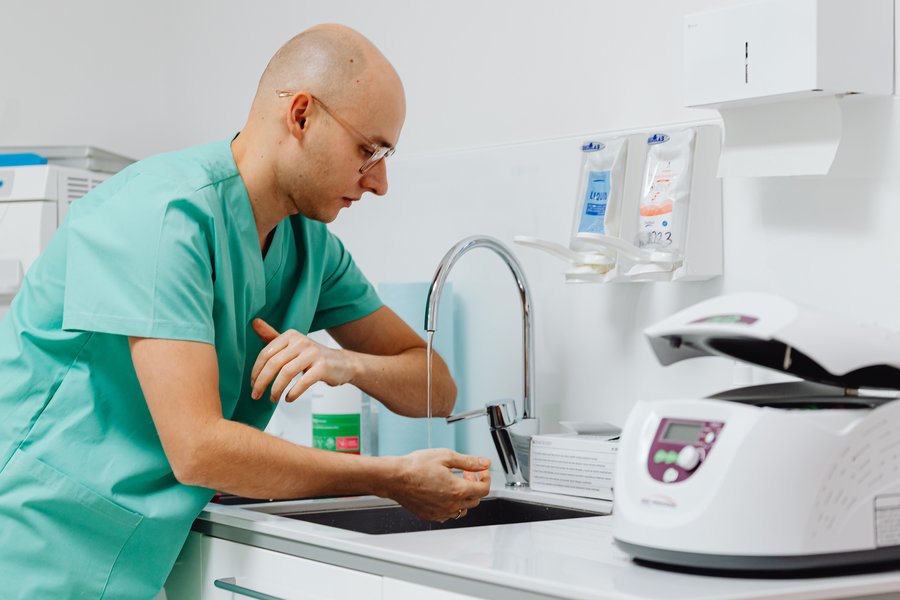
A dental group, a home care agency, a physician practice - each has a four-year infection control clock running for every licensee. No two dates line up, and the certificate often lives in someone's personal email.
This page owns state-mandated infection control coursework for licensed professionals, plus the in-service refreshers employers add on top. Annual OSHA retraining is a different clock and lives on bloodborne pathogens training tracking. License registration dates live on nursing license, medical license, and dental license tracking. (General information only - not legal or regulatory advice. See Sources.)
Remindax tracks course completions, providers, due dates, owners, status, and certificates you upload. It does not deliver coursework, submit attestations, request exemptions, or decide who is covered.
1. What is infection control training tracking?
It is a dated record of who completed approved infection control coursework, when, with which provider, and when the next course is due. In New York, Education Law section 6505-b and Public Health Law section 239 require listed professionals to complete approved coursework every four years, covering infection control, barrier precautions, and sepsis.
The obligation sits with each licensee, but employers need proof too - hospitals, for example, verify completion before credentialing physicians. Remindax keeps the roster dated, owned, and reminded. Your team decides what each person needs.
1.1 What sits on each licensee row
Licensee, state, and profession
The person, the state whose rule applies, and the profession the course must match.
Provider and course name
Which approved provider ran the course and which audience it was approved for.
Completion and next due
The completion date on the certificate and the date four years later, with reminders before it.
Certificate on file
The certificate of completion uploaded to the row, plus an owner and a status.
2. Which New York licensees need infection control coursework?
New York splits the requirement across two laws and two agencies: the State Education Department (NYSED) and the Department of Health (NYSDOH). The four-year cycle is the same.
| Professions | Law | Cycle | Agency |
|---|---|---|---|
| Dentists, dental hygienists, registered nurses, licensed practical nurses, optometrists, podiatrists | Education Law 6505-b | Every four years | NYSED |
| Athletic trainers (effective December 22, 2025, per NYSED) | Education Law 6505-b | Every four years | NYSED |
| Physicians, physician assistants, specialist assistants | Public Health Law 239 | Every four years | NYSDOH |
| Medical students, medical residents, PA students | Public Health Law 239 | During program orientation | NYSDOH |
Summary of the New York sources listed below, checked October 8, 2026. Not legal advice. Other states set their own rules. Confirm the current rule with the licensing board before you set a cycle.
Two details shape the roster. NYSED says the course must be appropriate to the licensee's practice, so record the profession each course was approved for, not just its title. And approved coursework must cover seven core elements, including sepsis awareness.
3. What does an infection control licensee roster look like?
One row per licensee per state. Illustrative - names, providers, and dates are made up.
| Licensee | State | Profession | Provider | Completed | Next due | Proof on file | Status |
|---|---|---|---|---|---|---|---|
| Nurse A | NY | RN | Provider 1 | Mar 14, 2023 | Mar 14, 2027 | Certificate uploaded | Current |
| Dentist B | NY | Dentist | Provider 2 | Dec 9, 2022 | Dec 9, 2026 | Certificate uploaded | Due within 90 days |
| Hygienist C | NY | Dental hygienist | Provider 2 | Sep 2, 2022 | Sep 2, 2026 | Certificate uploaded | Past due - escalated |
| Physician D | NY | Physician | Provider 3 | Jun 20, 2024 | Jun 20, 2028 | Missing | Proof requested |
| Nurse E | NY | LPN | Registered LPN program | Aug 1, 2025 | Aug 1, 2029 | Graduation documents | Current |
Illustrative roster only. The next-due column assumes the four-year New York cycle summarized in Section 2. Confirm current rules in Sources.
Hygienist C is past due and escalated. Physician D is current but has no certificate on file. Dentist B's reminder is firing now, with time to book an approved course.
3.1 Two dates worth watching
The course clock and the license registration clock are separate. NYSED licensees attest to compliance when they register, and the attestation form refers to coursework completed within the four years before the attestation date. Keep the next registration date beside the coursework row.
- ✓Course clock: four years from the completion date on the certificate.
- ✓Registration clock: the licensee's next registration date, tracked on the license row.
- ✓Earliest wins: remind on whichever date makes the course stale first.
4. What proof of infection control coursework should be on file?
Approved providers issue a certificate of completion. NYSED tells its licensees to keep it and a copy of the attestation for at least four years after the attestation date, and it audits a sample of licensees. For physicians, PAs, and specialist assistants, NYSED suggests filing a copy with the hospital personnel office.
Completion certificate
Upload it to the row with its provider and date.
Graduation documents
Recent graduates of registered programs may rely on program completion for the first cycle.
Keep the history
Keep older certificates on the row instead of overwriting them.
Providers have dates too: the NYSDOH provider list shows each provider's approved-through date and the audiences it may train. Recording the provider on every row keeps that check easy. Credentialing teams can link the row to their medical credentialing file instead of chasing a fresh copy.
5. How should exemptions and practice changes be tracked?
Both New York laws allow exemptions, for example where the nature of the practice does not call for the training or equivalent training was completed. Whether someone qualifies is for the licensee and the agency to decide. The tracker makes sure an exemption is a dated status, not a blank cell.
Exemption as a status
Record the exemption, the date it was granted, and a review date. Under Public Health Law 239, exemptions are reapplied for every four years.
Return to New York practice
NYSED gives licensees resuming practice in New York 90 days to complete the training. Log the return date as a trigger.
Licensed in more than one state
Add a row per state with the cycle your team confirmed, or mark none.
6. Where do employer in-service refreshers fit?
Many employers run their own infection control in-services - hand hygiene, PPE, cleaning and disinfection. Your policy sets these, not the licensing law, and they do not replace the state course. NYSED also says courses offered only to meet OSHA rules do not include all seven core elements.
The cleanest setup keeps three clocks on three linked rows, so nobody mistakes one for another:
| Training | Who sets it | Cycle | Where it is tracked |
|---|---|---|---|
| State infection control coursework | State law (e.g. New York) | Every four years in New York | This page |
| OSHA bloodborne pathogens training | Federal OSHA standard | Annual, plus task changes | Bloodborne pathogens training |
| Employer in-service refresher | Your policy | Whatever your team sets | A linked row on this tracker |
Illustrative comparison. Confirm each cycle against its own source.
In-service rows work best as recurring tasks with an attendance sheet uploaded. Training management keeps them next to your other required courses.
7. Who should own infection control training dates?
The licensee takes the course; someone on staff owns the roster:
Licensee
Gets the first reminder and uploads the new certificate.
Education or practice manager
Owns the rows, chases missing proof, and schedules in-services.
Compliance or HR lead
Sees every licensee and handles past-due escalations.
7.1 An example escalation ladder
- ✓90 days out: reminder to the licensee by Email, SMS, or WhatsApp.
- ✓30 days out: no new certificate logged, so the practice manager is copied.
- ✓Due date passed: the compliance lead is added and the row turns red.
- ✓Proof missing: a separate reminder fires until the certificate is uploaded.
Offsets are examples. HR compliance teams can fold this roster into onboarding, and compliance tracking works best when escalation lives in the tool, not one manager's inbox.
8. How Remindax tracks infection control training
Remindax is date-and-status tracking - not a course provider, filer, or license lookup:
One row per licensee
State, profession, provider, completion date, next due, and owner.
Certificates attached
Upload each certificate and keep earlier ones as history.
Linked refresher rows
In-services and exemptions sit beside the state course, each with its own date.
Exports by status
Pull everyone due in the next quarter, or everyone missing proof.
Remindax does not teach the course, check provider approvals, submit attestations, or request exemptions. It holds training certificates, dates, and owners - not patient data - on AWS hosting with encryption. GDPR-ready.
9. Why spreadsheets fail for infection control training
A four-year clock is long enough for everyone to forget it. Spreadsheets do not remind anyone.
- xNo alert when a four-year date approaches
- xCertificates scattered across inboxes
- xState course and OSHA training mixed in one column
- xExemptions recorded as blanks
- xDeparted staff never removed
- ✓Reminders well before each next-due date
- ✓Certificate attached to every row
- ✓Separate rows for state, OSHA, and in-service training
- ✓Exemptions dated and reviewed
- ✓Rows closed out when people leave
10. Key takeaways
- ✓Track one row per licensee per state: profession, provider, completion date, next due, and proof on file.
- ✓In New York, listed licensees complete approved infection control coursework every four years.
- ✓Watch the next registration date as well as the course date.
- ✓Keep OSHA bloodborne pathogens training and employer in-services on their own linked rows.
- ✓Remindax tracks dates and status and reminds by Email, SMS, and WhatsApp. It does not deliver courses, file, or give legal advice. Free to start.
11. Frequently Asked Questions
Education Law 6505-b covers dentists, dental hygienists, RNs, LPNs, optometrists, podiatrists, and athletic trainers. Public Health Law 239 covers physicians, physician assistants, and specialist assistants, plus medical students, residents, and PA students during orientation.
Every four years under both New York laws. Track four years from the completion date, and keep the licensee's next registration date beside it.
NYSED says courses offered only to meet OSHA rules do not include all seven core elements. Track the annual OSHA clock separately on bloodborne pathogens training tracking.
The provider's certificate of completion. NYSED asks its licensees to keep the certificate and a copy of the attestation for at least four years after the attestation date.
NYSED says coursework must be appropriate to the licensee's practice, though some courses are approved for several professions. Record the profession each course was approved for on the row.
Rules vary by state and profession. Add a row per state with the cycle your team confirmed with that board, or mark it as not required.
No. Remindax tracks dates, status, owners, and certificates. It holds training records, not patient data, on AWS hosting with encryption, and is GDPR-ready.
Yes - a forever-free plan, no credit card required.
Sources & References
Public educational material on New York infection control coursework, as of October 8, 2026 - not legal or regulatory advice. Confirm with NYSED, NYSDOH, or your own state board. This page does not provide filing or exemption instructions.
- *New York Education Law 6505-b - Course work or training in infection control practices (NY Senate)
- *New York Public Health Law 239 - Course work or training in infection control practices (NYSDOH)
- *NYSED Office of the Professions - Mandated Training Related to Infection Control
- *NYSED Office of the Professions - Infection Control and Barrier Precautions FAQ
- *NYSDOH - Health Care Provider Infection Control Training
- *NYSDOH - Infection Control Provider List
Never miss a four-year coursework date
Track every licensee's infection control course, certificate, and next due date - automatically.
GDPR-ready | AWS secure cloud | Encrypted storage | Setup under 5 minutes