
This scenario plays out in hospitals and clinics every single day — not because managers are careless, but because manual tracking systems simply cannot keep pace with the scale and complexity of healthcare credentialing. Basic Life Support (BLS) certification is one of the most universally required credentials in healthcare, and yet it remains one of the most commonly overlooked when it comes to proactive renewal management.
This guide covers everything you need to know about BLS certification: what it involves, who requires it, how the renewal process works, what happens when certifications lapse, and practical strategies for ensuring no one on your team ever faces a preventable compliance gap again.

1. What Is BLS Certification?
BLS (Basic Life Support) certification is a credential that demonstrates a healthcare provider's ability to perform life-saving interventions in cardiac and respiratory emergencies. It is not simply a checkbox — it is a set of rigorously tested, evidence-based skills that can mean the difference between life and death in the critical minutes before advanced medical support arrives.
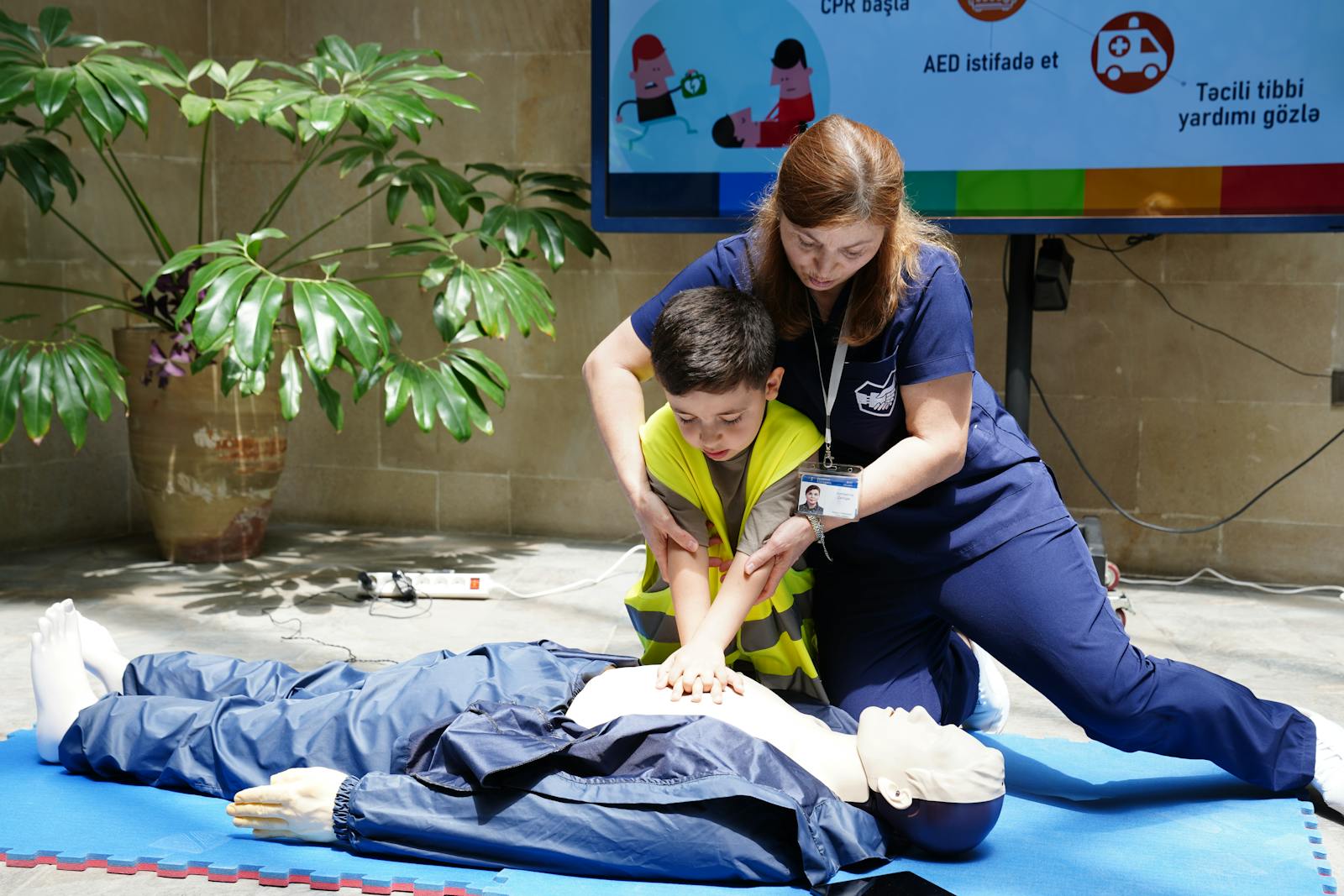
The training covers four core competency areas: high-quality CPR for adults, children, and infants; the recognition and use of automated external defibrillators (AEDs); relief of foreign-body airway obstructions in conscious patients; and team-based resuscitation techniques that reflect real-world clinical environments where coordination matters as much as individual skill.
The most widely recognized BLS certification is offered by the American Heart Association (AHA), which updates its guidelines based on the latest resuscitation science. The American Red Cross and other accredited organizations also provide equivalent courses. The AHA's BLS course is specifically designed for healthcare professionals and is the standard required by most hospitals, clinics, and regulatory bodies in the United States.
2. Who Needs BLS Certification?
BLS certification is required across a wide spectrum of healthcare and public safety roles. The credential is mandatory for:
- •Registered Nurses (RNs) and Licensed Practical Nurses (LPNs)
- •Physicians, physician assistants, and nurse practitioners
- •Emergency Medical Technicians (EMTs) and paramedics
- •Respiratory therapists and pulmonary technicians
- •Physical therapists, occupational therapists, and speech-language pathologists
- •Pharmacists and pharmacy technicians
- •Medical and nursing students during clinical rotations
- •Dentists, dental hygienists, and dental assistants
- •Home health aides and certified nursing assistants (CNAs)
- •Firefighters, lifeguards, and law enforcement officers
Beyond clinical settings, BLS is commonly required or strongly recommended for teachers, coaches, childcare providers, personal trainers, and social workers — any professional who may face a medical emergency among the populations they serve.
3. How to Obtain BLS Certification
BLS certification can be completed through two primary delivery formats. The instructor-led classroom course runs approximately 4 to 5 hours and covers all didactic content and hands-on skills evaluation in a single session. The blended learning format (such as the AHA's HeartCode BLS) combines online self-paced modules — typically 1 to 2 hours — with an abbreviated in-person skills session of 2 to 3 hours.
Both formats require passing a written knowledge exam and a hands-on skills evaluation assessed by an authorized BLS instructor. Participants must demonstrate proficiency in CPR technique, AED operation, and choking relief before receiving their certification card.
Validity Period: AHA BLS certification is valid for two years from the date of course completion. The certification card expires at the end of the month, two years from the original training date. For example, a course completed in March 2024 would expire at the end of March 2026.
4. Why BLS Certification Matters for Your Organization
BLS certification is far more than an administrative checkbox. It represents your organization's operational readiness to respond to the most critical moments in patient care — and its absence creates measurable clinical, legal, and financial risk.
4.1 Regulatory and Accreditation Requirements
The Joint Commission (TJC), the Centers for Medicare and Medicaid Services (CMS), and state licensing boards all require healthcare facilities to demonstrate that clinical staff maintain current BLS certification as a condition of operation. During surveys and audits, inspectors routinely verify credentialing records. A single lapsed certification can trigger a finding, and patterns of non-compliance can result in corrective action plans, fines, or jeopardized accreditation status — consequences that affect the entire organization, not just the individual employee.
4.2 Patient Safety in Every Department
Cardiac arrest does not wait for an ICU or an emergency department. It can happen in a radiology suite, a hospital cafeteria, a rehabilitation gym, or a patient's room on a general medical floor. When every clinical team member holds a current BLS card, your organization is equipped to deliver immediate, high-quality CPR in those critical first minutes before an advanced life support team arrives. Studies consistently demonstrate that timely, well-executed CPR significantly improves survival rates in out-of-hospital and in-hospital cardiac arrest.
4.3 Employer Liability and Legal Risk
An employee providing emergency care with an expired BLS certification creates significant legal exposure for your organization. If a poor patient outcome occurs and a credentialing gap is discovered during subsequent review, liability claims may follow. Proactive compliance management is not only good clinical governance — it is essential risk management.
4.4 Staffing Continuity and Operational Impact
When a team member's BLS certification lapses, most healthcare employers are required to temporarily reassign that individual from patient-facing clinical duties until recertification is complete. This creates immediate staffing gaps, increases workload for remaining team members, and can affect care quality — all of which are entirely preventable with proper tracking and advance notice.
5. The BLS Renewal Process: What You Need to Know
Renewal is simpler and faster than initial certification — but only if you do it before your current certification expires. The distinction matters significantly, both for the individual provider and for the organization managing credentialing at scale.
5.2 Renewal vs. Initial Recertification
A BLS renewal course (taken while certification is still valid) typically runs 1.5 to 3 hours. It focuses on refreshing skills, reviewing updates to AHA guidelines, and demonstrating continued proficiency through a written exam and skills check. This is the preferred path — shorter, less expensive, and less disruptive to scheduling.
If your BLS certification has already expired, you can no longer take the abbreviated renewal course. You must instead complete the full initial BLS Provider course, which runs 4 to 5 hours and covers all content from scratch. This adds significant time and typically costs more — a strong argument for staying ahead of expiration dates.
Once a BLS certification expires, the abbreviated renewal course is no longer an option. The full initial provider course is required — typically longer and more expensive. This is why advance renewal scheduling matters so much.
5.3 Recommended Timeline for Renewal
Most credentialing experts and the AHA itself recommend beginning the renewal process at least 30 to 60 days before your certification expires. For organizations managing large teams across multiple locations, a 90-day lead time is more practical — it allows time to identify available training slots, coordinate scheduling around shift rotations, and ensure that updated cards are submitted to the credentialing office before any gap occurs.
5.4 Cost of BLS Certification and Renewal
AHA-affiliated BLS classroom courses typically range from $30 to $100 depending on the provider, location, and format. Renewal courses are generally less expensive than initial certification. Many employers, particularly hospital systems, cover BLS renewal costs as part of their professional development or occupational health programs. Purely online BLS certificates that do not include an in-person skills evaluation are generally not accepted by healthcare employers, so providers should confirm their employer's specific requirements before enrolling.
6. Common Scenarios for Tracking BLS Certification Expiration
Credentialing challenges look different depending on the size and structure of your organization. These are the most common scenarios where proactive BLS tracking creates real operational value.

6.1 Hospital-Wide Credential Management
Large hospitals may employ hundreds or thousands of clinical staff, each with a different BLS expiration date. Credential coordinators managing BLS alongside ACLS, PALS, state nursing licenses, and department-specific certifications need a system that prevents any single credential from falling through the cracks — especially when renewal dates are staggered throughout the year across dozens of units and floors.
6.2 Nursing Department Compliance Audits
Nurse managers are routinely tasked with verifying that every member of their unit holds a current BLS card. During Joint Commission surveys or internal audits, a single lapsed certification can trigger a finding that reflects on the entire department. Proactive tracking allows managers to identify upcoming expirations weeks or months in advance — giving nurses time to enroll in a renewal course without disrupting their shift schedule or requiring last-minute administrative escalation.
6.3 EMS Agency Recertification Cycles
Emergency medical services agencies must ensure that every EMT and paramedic maintains current BLS certification. With field crews rotating across shifts and stations — and some providers working for multiple agencies simultaneously — tracking individual expiration dates is a logistics challenge that exceeds the capacity of any spreadsheet-based system. Automated tracking is not a convenience in this context; it is a necessity.
6.4 Clinical Student and Intern Onboarding
Hospitals and clinics hosting medical students, nursing students, and residents must verify BLS certification before allowing these individuals to participate in direct patient care. With new cohorts arriving at different points throughout the academic year, verifying and tracking temporary staff credentials adds a layer of complexity that requires its own workflow, separate from but integrated with the tracking systems used for full-time employees.
6.5 Multi-Facility Healthcare Systems
Healthcare organizations operating across multiple locations — hospitals, outpatient clinics, urgent care centers, rehabilitation facilities, long-term care sites — must coordinate BLS compliance across all sites simultaneously. Different facilities may follow different audit schedules, use different training providers, and have different staffing models. Centralized visibility into certification status across the entire enterprise is essential to consistent compliance.
7. How to Track BLS Certification Expiration Dates Effectively
With BLS certifications expiring on a rolling two-year cycle and each employee's renewal date falling at a different point on the calendar, manual tracking quickly becomes unsustainable. The challenge scales with every hire, every transfer, and every renewal — and the consequences of a gap are immediate and serious.
7.1 The Problem with Manual Systems
Common pitfalls of spreadsheet-based tracking include files that fall out of date as employees join, leave, or renew at different times; reminder emails that are overlooked or buried in full inboxes; inconsistent record-keeping across departments or locations; and difficulty producing clean compliance reports during time-sensitive audits. In a high-volume, multi-department environment, these failures are not exceptions — they are inevitable.
8. Remindax: Automated BLS Certification Tracking
Remindax is a dedicated expiration tracking platform built for organizations that need reliable, automated visibility into credentialing status — including BLS certification — across teams of any size.
With Remindax, you can configure multi-stage notification schedules tailored to your organization's renewal workflow. For example, automated alerts can be sent to the employee, their manager, and the credentialing office at 90, 60, and 30 days before a BLS card expires — giving every stakeholder sufficient lead time to act before a lapse occurs.
- ✓Centralized dashboard with real-time compliance status for every team member
- ✓Configurable multi-stage alerts at 90, 60, and 30 days pre-expiration
- ✓Notifications routed to employees, supervisors, and credentialing staff simultaneously
- ✓Audit-ready compliance reports generated in seconds — no manual compilation
- ✓Scalable across departments, facilities, and entire multi-site health systems
- ✓Tracks all credential types alongside BLS: ACLS, PALS, nursing licenses, and more
Whether your team has 10 members or 10,000, Remindax ensures no BLS certification ever lapses unnoticed again.
9. What Happens When BLS Certification Lapses?
The consequences of an expired BLS certification extend well beyond the individual provider. Understanding the full downstream impact is essential for building an organizational culture that treats proactive renewal as a priority rather than an afterthought.
9.1 For the Individual Provider
Once a BLS certification expires, the provider can no longer take the abbreviated renewal course and must complete the full initial course — a longer, more expensive, and more time-consuming process. In most healthcare settings, the provider will be temporarily removed from direct patient care duties until recertification is complete. Depending on institutional policy, this may also trigger review of other credentials that list current BLS as a prerequisite.
9.2 For the Department and Unit
Even a single lapsed certification on a nursing unit creates an immediate staffing problem. The affected provider must be reassigned, their patient load must be redistributed, and other team members must absorb additional responsibilities at short notice. On units already operating at or near capacity, this ripple effect can materially impact care delivery quality and staff morale.
9.3 For the Organization
During accreditation surveys conducted by The Joint Commission or state health department inspectors, auditors will verify BLS certification status across clinical departments. A pattern of lapses — or even a single documented gap at the wrong moment — can result in a finding, a corrective action requirement, and in serious cases, risk to accreditation status. The reputational and operational cost of these outcomes far exceeds the modest investment required to prevent them.
10. Benefits of Maintaining Current BLS Certification
10.1 For Your Organization
- ✓Accreditation readiness: Walk into any Joint Commission or CMS survey with documented, current BLS status for every clinical staff member.
- ✓Risk reduction: Eliminate the legal and operational exposure that comes with undetected certification lapses.
- ✓Operational continuity: Avoid last-minute scrambles for renewal courses that disrupt shift schedules and staffing levels.
- ✓Quality of care: A consistently trained workforce delivers better emergency response outcomes — particularly in the critical first minutes of a cardiac event.
10.2 For Your Employees
- ✓Career protection: Many advanced credentials (ACLS, PALS) require a current BLS card as a prerequisite. Letting it lapse can create cascading credentialing issues.
- ✓Skill currency: BLS renewal courses incorporate the latest AHA resuscitation science guidelines, ensuring providers stay current with evolving best practices.
- ✓Job security: Employees who maintain current certifications avoid the disruption of being pulled from clinical assignments while completing retraining on an emergency basis.
- ✓Confidence: Regular renewal reinforces the muscle memory and decision-making skills needed to act decisively in a real emergency — when hesitation costs lives.
10.3 For Patients and Their Families
- ✓Safety: Patients receive better emergency care when every member of their care team is trained and current in basic life support.
- ✓Trust: Families place their loved ones in facilities that demonstrate rigorous credentialing standards and invest in ongoing staff training.
- ✓Better outcomes: Studies consistently show that timely, high-quality CPR improves survival rates in cardiac arrest. Current BLS training is not an administrative requirement — it is a clinical one.
11. Key Takeaways
- ✓BLS certification is required for nearly all healthcare professionals and many public safety roles, validating the ability to perform CPR and operate an AED.
- ✓AHA BLS certification is valid for two years and expires at the end of the month, two years from the training date.
- ✓If your BLS certification expires, you must complete the full initial course — not the shorter renewal course — adding significant time and cost.
- ✓The Joint Commission, CMS, and state licensing boards require current BLS certification for clinical staff; lapses create compliance and accreditation risk.
- ✓Begin the renewal process at least 30 to 90 days before expiration to allow adequate time for scheduling, completing, and submitting updated credentials.
- ✓BLS renewal courses take 1.5 to 3 hours and include both a written exam and hands-on skills evaluation.
- ✓Automated tracking platforms like Remindax eliminate last-minute scrambles by centralizing records and delivering multi-stage expiration alerts to all relevant stakeholders.
12. Conclusion: Take Control of BLS Certification Tracking
BLS certification is a basic requirement in healthcare. It is simple to understand, but hard to manage for large teams. The renewal cycle is every two years. Staff members have different expiry dates. Rules are strict, and there is no room for mistakes. This makes tracking BLS compliance difficult without the right system.
The good news is that you can manage it better with a proactive approach. Set clear renewal timelines. Inform your team in advance. Use a tool like Remindax to automate reminders and store all records in one place. This helps you avoid last-minute stress and reduces compliance risks.
When every staff member has a valid BLS certificate, your organization stays prepared. You can show records anytime when needed. This improves compliance, keeps patients safe, and ensures your team is ready to act in critical situations.
Start Tracking with Remindax →13. Frequently Asked Questions
Once your BLS certification expires, you cannot take the abbreviated renewal course. You must complete the full initial BLS Provider course, which is longer and more expensive. In a healthcare setting, an expired BLS card typically results in temporary removal from clinical duties until recertification is complete. Employers may also face compliance citations during accreditation surveys if lapses are discovered.
AHA BLS certification is valid for two years from the date of course completion. The card expires at the end of the month in which training was completed, two years prior. A course completed in March 2024, for example, would expire at the end of March 2026.
A BLS renewal course typically takes 1.5 to 3 hours, depending on format. Blended learning options allow completion of online modules in 30 to 90 minutes, followed by a short in-person skills check. The full initial course, required if certification has already expired, takes approximately 4 to 5 hours.
In most healthcare settings, no. Hospitals and clinics require current BLS certification as a condition of employment for clinical staff. An employee with an expired card will typically be reassigned from patient care duties or placed on administrative leave until recertification is completed. Specific policies vary by employer and state.
Most credentialing experts recommend starting the renewal process 30 to 60 days before expiration. For organizations managing large teams, a 90-day lead time is more practical — it allows time to find available training slots, coordinate around shift schedules, and ensure updated cards reach the credentialing office before any lapse occurs.
Purely online BLS courses (with no in-person skills component) are generally not accepted by hospitals and healthcare systems. Most employers require an in-person, hands-on skills evaluation. The AHA's HeartCode BLS blended learning format — online modules plus an in-person skills session — is widely accepted. Always verify your employer's specific requirements before enrolling.
Remindax automates the entire BLS tracking lifecycle — from storing certification records to sending multi-stage expiration alerts at 90, 60, and 30 days before expiration. Notifications go simultaneously to the employee, their manager, and the credentialing office, ensuring no certification lapses go unnoticed. Real-time compliance dashboards and instant audit-ready reports eliminate the administrative burden of manual tracking entirely.
Related document tracking
🎓 Certification Tracking
Track every employee certification and its renewal cycle — from one compliance dashboard.
Explore certification tracking software →🪪 Credentials Tracking
Keep clinical staff certifications and credentials current alongside licenses and permits.
Explore credentials tracking →CPR Certification →
The core CPR credential BLS builds on — track every renewal on its two-year cycle.
ACLS Certification →
Advanced cardiovascular life support, required for many acute-care roles alongside BLS.
Dental License →
Dental teams track CPR/BLS alongside dentist, hygienist, and assistant licenses.
Childcare License →
In childcare, BLS is one clock inside a bigger bundle — the facility license, staff checks, training hours, and inspections.
Tracking certifications across a clinical team? See how healthcare compliance teams keep every certification and license current across locations.