
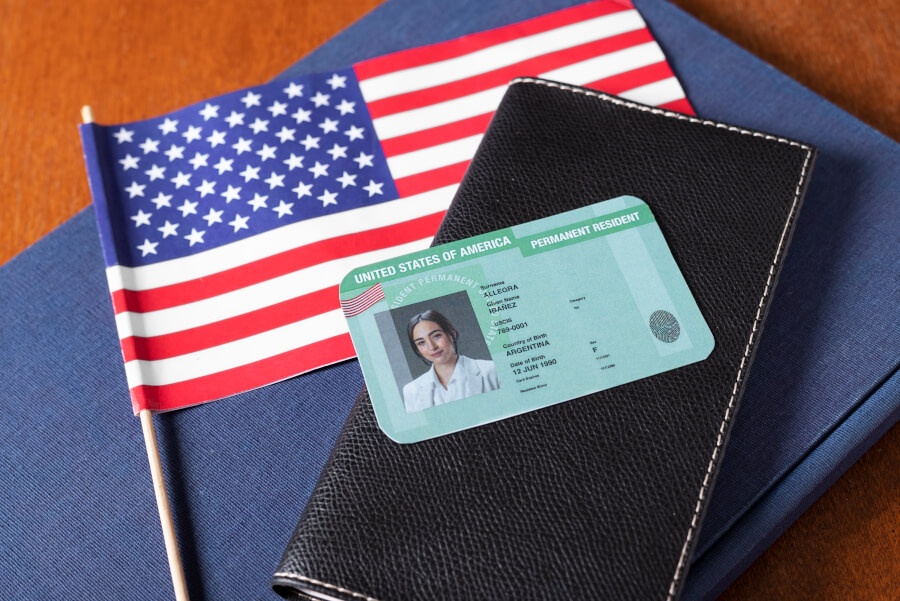
A green card holder can do everything right — never leave the country, never change jobs, never break a single rule — and still end up holding an expired card. That's because a Permanent Resident Card is evidence of lawful permanent resident status, not the status itself: the card has its own expiration date, while the underlying status doesn't expire on its own.
The trouble is that an expired card stops working as proof — for a reverification at work, a re-entry at the border, a new lease, a license renewal at the DMV — even though nothing about the person's actual status changed. USCIS tells filers to submit Form I-90 when the card “will expire within six months or has already expired,” and as of a 2024 rule change, filing that renewal now automatically extends the card's validity by 36 months through the receipt notice alone.
On top of that renewal clock, federal law separately requires permanent residents to carry proof of registration at all times — a distinct obligation with its own penalty, and one that doesn't pause while a renewal is pending. (General information, not immigration advice — see Sources & References.)
1. What is a green card, and does it expire?
A green card — formally a Permanent Resident Card, Form I-551 — is the document U.S. Citizenship and Immigration Services (USCIS) issues as evidence that someone holds lawful permanent resident (LPR) status. The distinction that governs everything on this page sits in that sentence: the card is evidence of the status, not the status itself.
Lawful permanent resident status is generally permanent unless it is formally lost, through abandonment, removal, or another legal process. The card is a physical document with its own validity period that USCIS renews on request. Those two facts are what create the situation this page exists for: a person whose right to live and work in the United States is entirely intact, holding a document that no longer proves it. Remindax helps track the card's expiration and its renewal-filing window — it doesn't determine immigration status, file Form I-90, or provide legal advice.
1.1 The moving parts
Four things decide when a permanent resident card expiration actually needs attention. Requirements and terms differ by card type and circumstance, so confirm what applies to the specific card you hold or track at the official sources in Section 11.
Standard card validity
Most Permanent Resident Cards are issued for a set term, commonly cited as 10 years for standard LPRs. It's long enough that the renewal date arrives once in a decade — which is precisely why nobody has a habit built around it.
Conditional resident cards
Cards issued to conditional permanent residents — generally those who obtained status through a recent marriage — are valid for a shorter term and are handled through Form I-751 to remove conditions, not Form I-90. A different form, a different clock.
Form I-90
The Application to Replace Permanent Resident Card — the form used to renew an expiring or expired card, or to replace one that's lost, stolen, or damaged. This is the filing the tracked date points at.
The 36-month automatic extension
Since September 10, 2024, a properly filed I-90 receipt notice automatically extends an expiring or expired card's validity by 36 months. It's a substantial safety net — and one that only exists once the filing has happened.
If you're tracking a green card alongside other credentials for a workforce rather than for yourself, the wider category view — what a credential register holds and how renewal cycles compare across document types — is covered in our credentials tracking software guide. This page is about one card's dates: which ones govern, and how to keep them from passing unnoticed.
2. Does a green card expire?
Yes — the physical card expires, while the status behind it generally does not. Per USCIS and federal law (confirm at the sources in Section 11):
- 1.The physical card expires; the status generally doesn't. A Permanent Resident Card carries its own validity period. Lawful permanent resident status itself is not tied to that date.
- 2.Renew with Form I-90. USCIS points to filing when the card has already expired or will expire within six months.
- 3.A 36-month automatic extension applies once filed. Under a 2024 rule, a properly filed I-90 receipt notice, shown together with the expired card, extends evidence of status and work eligibility for 36 months while the replacement is produced.
- 4.A separate carry-at-all-times law exists. Under 8 U.S.C. §1304(e), permanent residents age 18 and over must carry proof of registration on their person at all times. Violating it is its own misdemeanor — a fine of up to $100 and/or up to 30 days — regardless of the card's expiration date.
Two different clocks run at once, and most “does my green card expire” guidance collapses them into one. The first is the card's expiration and renewal clock: a date printed on the document, a filing window ahead of it, and a receipt notice that buys time once the filing is in. The second is the carry-at-all-times obligation, which has no date at all. It's a standing requirement that applies whether or not a renewal is pending, and it is the one people are most surprised to learn is a distinct federal offense rather than a consequence of letting the card lapse.
Keeping the two separate matters because the remedy for each is different. The renewal clock is solved by filing on time — which is a tracking problem. The carry obligation is solved by having valid proof in hand, which is why a green card expiring soon is a problem well before its expiration date arrives.
3. Why green card expiration tracking matters
3.1 An expired card can't do its job
The status hasn't changed, but the document has stopped speaking for it. An expired card no longer works cleanly as proof at the moments proof is demanded — a reverification at work, a re-entry, an identity check, a benefits or licensing counter. The person is exactly as lawfully resident as they were the week before; the paper simply no longer says so on its face.
3.2 The renewal window has real lead time
USCIS flags the “expiring within six months” window for a reason: renewal processing isn't instant. A green card renewal reminder that arrives the week the card expires is not a reminder, it's an announcement. The date worth tracking is the one that opens the filing window, not the one printed on the card.
3.3 The 36-month extension only helps if you've already filed
This is the part that most often gets misread as reassurance. The automatic extension attaches to a timely I-90 receipt notice — it does nothing at all for an expired card sitting untouched in a drawer. Three years of cover sounds like a wide margin, and it is, but it is earned by the act of filing. A cardholder who assumes the extension protects them without filing has the worst of both: no valid card and no receipt.
3.4 The carry obligation runs on its own
It doesn't pause because a renewal is pending, and it isn't satisfied by the fact that a filing is in progress somewhere. It's a distinct federal requirement with a distinct penalty, and because it has no expiration date attached, it is invisible to any system built purely around dates — which is most of them.
4. Who needs to track a green card
A permanent resident card expiration is tracked from two directions at once — by the person who holds it, and by whoever in an organization is responsible for knowing that the documents on file are still current.
Individual permanent residents
The most common case, and the easiest to miss. A ten-year term means the renewal date arrives roughly once per decade — long enough that the address on file, the phone number, and sometimes the memory of the date itself have all changed since the card was issued.
HR and onboarding teams
Teams that hold employment documents need to know when an employee's card is nearing expiration, well before anyone is standing at a desk asking for current proof. The administrative side of that record-keeping sits with whoever runs office administration and document retention.
Global mobility and relocation teams
Anyone coordinating relocating or dual-based employees is already tracking status documents across jurisdictions. A green card expiration date belongs in the same register as everything else with a date on it, not in a separate note somewhere.
Compliance and immigration-adjacent teams
For teams coordinating recurring credentials across a business, a green card is one dated obligation among many. Compliance tracking here means tracking dates and keeping a record — not governance, risk, or legal determinations.
Multi-national employers with permanent resident staff
Where a workforce includes permanent residents alongside people holding other status documents, the value is centralization: one place where every expiration date lives, whoever holds which document. That's the problem HR compliance tracking is built around.
5. What happens when a green card expires
An expired green card doesn't erase lawful permanent resident status by itself. What it does is erase the card's usefulness as proof of that status at the exact moment someone needs to show it — and that is almost always the worst possible time to discover the date has passed.
A traveler re-entering the country, a clerk processing a license renewal, an employer running eligibility checks: each of them can treat an expired card as a document that no longer establishes what it once did, even though nothing about the underlying status has actually changed. The cardholder is left explaining a distinction that is entirely correct and entirely useless in the moment, because the person on the other side of the counter is looking at a date.
That is why USCIS points to filing Form I-90 as soon as the card is within six months of expiring rather than waiting for it to lapse outright. Renewal processing takes time. Until 2024, cardholders who filed close to — or after — the deadline could be left holding an expired card with only a short automatic extension to bridge the gap, which made the timing of the filing genuinely consequential.
The 2024 rule change addressed a large part of that risk by extending the automatic bridge to 36 months once a proper I-90 receipt is in hand. It is a meaningful improvement, and it is worth being precise about what it does and doesn't cover: the extension exists because the renewal was filed. It does nothing for a card that has simply been left to expire unaddressed. The 36 months are not a grace period granted to everyone whose card ran out; they are cover granted to someone who acted.
And separate from all of it, the carry-at-all-times requirement doesn't pause during a renewal. A permanent resident is still expected to have proof of registration on hand, and the penalty for failing to is its own misdemeanor — unrelated to whether a renewal application is pending or approved. Tracking both the card's expiration date and the point at which Form I-90 needs to be filed keeps a cardholder — or the team tracking them — ahead of both problems at once.
None of the above is a determination about anyone's status, eligibility, or filing obligations, and it is not legal advice. It describes publicly published requirements so you know which dates are worth putting in a tracker. For your specific situation, USCIS and a qualified immigration attorney are the authorities — the official sources are listed in Section 11.
6. How Remindax keeps green card expirations visible
One dashboard
Track green card expiration dates alongside passports and every other credential the same person or workforce holds — instead of separate calendars, inboxes, and files that nobody owns together.
Advance renewal reminders
Staged alerts ahead of the “expiring within six months” filing window, delivered by Email, SMS, and WhatsApp — so the reminder reaches someone while filing is still comfortably early.
Assign responsibility
Keep a named responsible person tied to each tracked card, whether that's the individual, an HR coordinator, or a mobility lead — so a date is never everyone's job and therefore nobody's.
Keep records organized
Store the card's key dates and related notes together, so when current proof is requested the relevant dates and history are in one place rather than reconstructed under pressure.
Remindax tracks the card's expiration date and reminds you. It does not file Form I-90, determine immigration status, verify eligibility, or provide immigration or legal advice. USCIS and, where appropriate, an immigration attorney handle their part; Remindax makes sure the date doesn't arrive before you're ready for it.
7. Why spreadsheets fail for green card tracking
A spreadsheet can hold an expiration date. What it can't hold is the shape of this particular timeline, which has more than one moving part: the six-month filing window ahead of the printed date, the separate 36-month extension that only exists after a receipt is in hand, and — for conditional residents — an entirely different form and clock that a generic “green card” row quietly misrepresents.
A static sheet also does nothing about the carry-at-all-times obligation, which has no expiration date to track at all. It's a standing requirement, and standing requirements are invisible to a system whose only concept is a due date.
Then there's the interval problem. A ten-year term means the row sits untouched for most of a decade. Nobody opens the file, nobody notices the date approaching, and by the time anyone looks, the useful window has already narrowed. An automated system holds the card's actual expiration date, triggers reminders well before the six-month mark so there's time to file, and keeps the responsible person aware without relying on someone remembering a date that only matters once every several years. That's the value on offer here: not replacing USCIS or legal counsel, but making sure the renewal window doesn't arrive as a surprise.
- ✗Keyed to the printed expiration date — not the earlier date that opens the filing window
- ✗Sits untouched for most of a ten-year term, unread by anyone
- ✗Collapses standard and conditional cards into one row with one assumed form
- ✗No way to represent a standing obligation that has no date
- ✗Leaves no record of what was due, or who was told
- ✓The renewal-filing window tracked as its own date, ahead of expiry
- ✓Staged alerts that fire on their own, however long the term
- ✓A named responsible person attached to every tracked card
- ✓Every credential across every person in one filterable register
- ✓Reminders by Email, SMS, and WhatsApp, with an exportable history
8. Key takeaways
- ✓A Permanent Resident Card generally expires on its own schedule even though lawful permanent resident status does not.
- ✓Form I-90 is used to renew or replace an expiring, expired, lost, or damaged card — ideally starting when it's within six months of expiring.
- ✓Since a 2024 rule change, a timely-filed I-90 receipt notice automatically extends a card's validity by 36 months — but only once the filing has been made.
- ✓Separately, federal law requires permanent residents 18 and over to carry proof of registration at all times — a standing obligation, not a renewal deadline.
- ✓Remindax tracks the card's expiration date and the renewal-filing window; it doesn't file forms, determine status, or provide immigration advice.
Never let a renewal window catch your green card off guard
Track your green card's expiration and I-90 renewal window — automatically. Whether it's one card you hold yourself or permanent resident cards across a whole workforce, Remindax watches every date and reminds the right person while there's still time to act.
GDPR-ready · AWS secure cloud · Encrypted storage · Setup in under 5 minutes
9. Frequently Asked Questions
The physical Permanent Resident Card generally expires on its own schedule (commonly a 10-year term for standard cards), even though lawful permanent resident status itself generally does not.
Form I-90, Application to Replace Permanent Resident Card, is used to renew an expiring or expired card, or to replace a lost, stolen, or damaged one.
USCIS guidance points to filing when the card will expire within six months or has already expired.
Since a 2024 rule change, a properly filed Form I-90 receipt notice automatically extends an expiring or expired card's validity by 36 months as evidence of status and employment authorization while the new card is produced.
Generally no - conditional permanent residents typically hold a shorter-term card and use Form I-751 rather than Form I-90 to remove conditions.
Yes - federal law requires permanent residents age 18 and over to carry proof of registration at all times, separate from the card's renewal schedule, with its own penalty for noncompliance.
No. Remindax tracks the card's expiration date and reminds you; filing Form I-90 and determining immigration status are handled by you and, where appropriate, an immigration attorney or USCIS.
Yes - Remindax offers a forever-free plan, no credit card required.
11. Sources & References
This page summarizes public requirements; it isn't immigration or legal advice. Terms and processes differ by card type and circumstance — confirm your specific situation with USCIS or a qualified immigration attorney.
- • USCIS — Form I-90, Application to Replace Permanent Resident Card — who files, when to file, and what the form covers.
- • USCIS — Green Card Validity Extension to 36 Months for Green Card Renewals — the September 10, 2024 alert setting the automatic extension on I-90 receipt notices.
- • 8 U.S.C. § 1304(e) — Alien Registration (U.S. Code) — the statutory carry-at-all-times requirement and its penalty.
- • eCFR — 8 CFR § 264.1, Registration and Fingerprinting — regulatory context for Form I-551 as evidence of registration.