
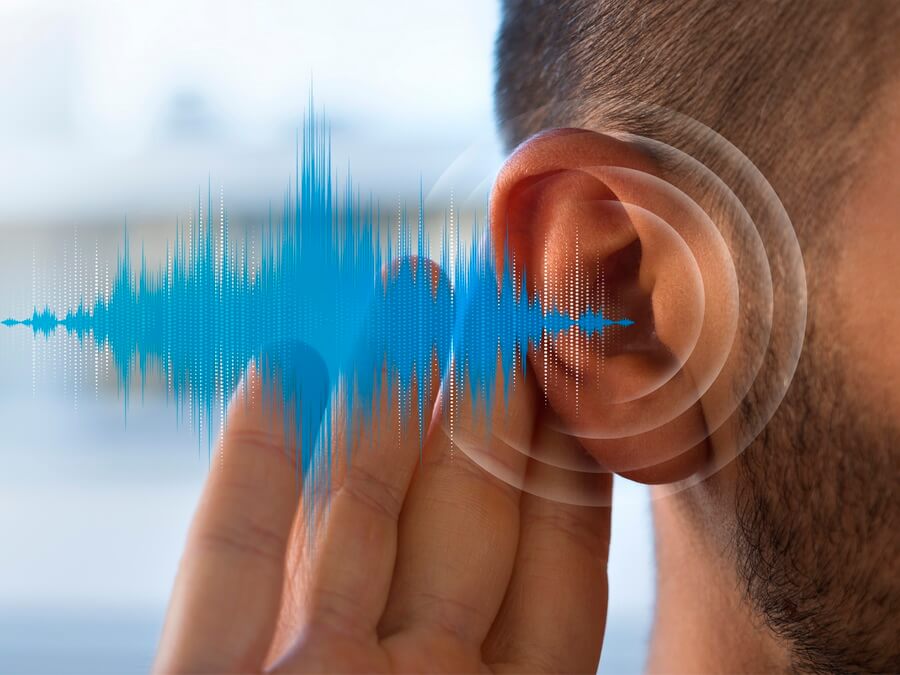
A hearing test at work isn't a pass-or-fail exam — it's a data point in a trend, and the trend is the whole point.
When noise on the job reaches the level that triggers OSHA's hearing conservation program, each covered employee gets a baseline audiogram, and then a test every year after. The annual one only means something because it's compared against that preserved baseline: the program is designed to catch a gradual shift in hearing over time — a Standard Threshold Shift — before it becomes permanent loss. That design has consequences for what you have to keep. You have to preserve the baseline for as long as the employee is covered, run each annual test on schedule, and when a shift shows up, act on it within the follow-up steps and their timing. Around all of that sit annual training and the noise monitoring that decides who's even in the program. Miss a year and you haven't just skipped a test — you've lost the comparison that the whole program exists to make. For an employer with a floor full of exposed workers, that's a lot of individual clocks. Here's how it works to track, and how to keep every employee's program current.
Remindax tracks the dates and status — never the results.
1. What does a hearing conservation program require?
When workplace noise reaches OSHA's action level, the employer has to run a hearing conservation program. It has five moving parts: noise monitoring to identify who is exposed, a baseline audiogram for each covered employee, an annual audiogram compared against that baseline to detect a Standard Threshold Shift, follow-up when a shift is found, and annual training — with recordkeeping underneath all of it. Remindax helps you track the status and dates of those parts — audiometric testing, training, and monitoring — per employee, and reminds you before each one falls due. It doesn't perform audiograms, monitor noise, or hold hearing results or any other health data.
What makes this different from the rest of the safety calendar is that it measures a person over time rather than certifying them at a moment. Most credentials in this cluster are self-contained: a worker completes confined space entry training or a fall protection course, a card is issued, and the card expires on a printed date. Nothing about last year's card matters once this year's is in hand. A hearing program inverts that. The very first test a worker takes is the one that keeps mattering — for years, sometimes for a whole career — because every test after it is read against that first result.
1.1 The program's moving parts
Five things run on their own schedules, and only one of them is the test everybody thinks of:
- →Noise monitoring — measures exposure and identifies which employees are covered by the program at all. It's re-run when noise conditions change, and it's the gate everything else sits behind.
- →Baseline audiogram — taken once for each covered employee, within a set time of first exposure, and retained so that every later test has something to be measured against.
- →Annual audiogram — a test each year for each covered employee, compared to their baseline. On its own it says very little; against the baseline it says everything the program is looking for.
- →Shift follow-up — when a Standard Threshold Shift is detected, defined steps kick in, each with timing of its own: retesting, notifying the employee, reviewing hearing protection, and sometimes adjusting work practices.
- →Annual training — hearing conservation training refreshed each year for covered employees, covering the effects of noise, the protection available, and the purpose of the testing itself.
Requirements under OSHA's occupational noise exposure standard — including the action level, the timing of the baseline, the annual interval, retention, and the follow-up steps after a shift — are set by regulation and can change. Confirm the current rule for your workplace with OSHA and your occupational-health provider. This is general information, not medical or legal advice.
Noise monitoring isn't a document you renew — it answers a prior question: who is in this program? Add a machine, change a shift pattern, move a work cell, or open a second line, and the answer can change, which is why monitoring is re-run when conditions change. The practical effect on tracking is that the covered population isn't fixed. New hires enter it and need baselines. Existing workers can enter it after a layout change and need one too. So the monitoring review isn't just another date in the calendar — it's the date that tells you whether your list of people with clocks is still the right list.
The failure that catches programs out isn't a worker who was never tested. It's a worker who has been tested faithfully for six years — and whose baseline was never captured, or was captured and then lost in a provider change, a records migration, or a filing cabinet nobody emptied properly. Every one of those six annual tests still exists. Not one of them can do the job it was taken for, because there is no first result to read them against. The folder looks full. The program has been running blind since the day it started.
2. How often is a workplace hearing test required?
Once, within a set time of the employee's first exposure — and retained for comparison for as long as they're covered.
Every year for each covered employee, and compared against the baseline rather than assessed on its own.
If a Standard Threshold Shift is found, defined steps apply — retest, notify, review protection — each within its own timing.
Training is annual; noise monitoring is re-run when conditions change and decides who's covered.
The comparison is the crux. An annual audiogram is only meaningful against the preserved baseline, so two obligations run in parallel and neither substitutes for the other: keep the baseline safe, and take each year's test on time. A missed year is a missing data point in the trend — and a trend with a hole in it is exactly the thing this program was designed to prevent.
It's worth being precise about what "compared" means here, because it changes how you think about the record. The annual test doesn't replace the baseline in the file; it joins it. Nothing gets superseded, nothing gets thrown away, and the value of the older record goes up over time rather than down, because the longer the series runs, the more clearly it shows what has happened to that person's hearing. That's an unusual property for a compliance record. Most of them decay — a certificate ages out, an inspection is overtaken by the next one, a policy is replaced at renewal. This one accrues.
The nearest neighbor in the safety calendar is the respirator fit test tracking page, and the two are opposites in a way that's easy to miss because both are annual, per-employee, and health-adjacent. A fit test is self-contained: this year's test replaces last year's completely, and once the new one is done, the old one has no further use. Hearing conservation runs the other way round. The first test is the one you can never let go of, and each annual is close to meaningless read on its own. One program can throw last year's test away; the other can never throw the first one away. Track them accordingly — a fit-test register only needs the current date, while a hearing register needs the whole series intact.
3. Why tracking hearing conservation matters
Four features of the requirement combine to make it unusually easy to let slide across a workforce:
A missed annual breaks the comparison
The program detects change over time, so a skipped year loses the data point the whole thing depends on — and the gap is a compliance finding in its own right.
The baseline has to be preserved
Each employee's baseline is retained for comparison for as long as they're covered. Lose it and every future test loses its reference point.
A detected shift has follow-up timing
When a Standard Threshold Shift is found, the required steps come with their own deadlines — and those deadlines need tracking too.
Per employee, plus training and monitoring
Every covered worker has their own clock, and annual training and periodic monitoring sit on top — so the calendar multiplies fast.
The second point deserves particular attention, because preservation is a different discipline from scheduling and organizations are far better at the second than the first. A due date has an owner, a reminder, and a moment when someone notices. A retained record has none of those things. It simply sits somewhere, being either present or absent, and nobody discovers which until the day it's needed — often years later, in front of an inspector or during a claim. The baseline is the single most valuable record in the program and the one least likely to be checked on any given Tuesday.
The reassuring part is that none of this needs sensitive information to manage. What a program has to know is whether each employee has a baseline on file and when their next test, training, and monitoring review fall due. Nothing about hearing levels, nothing about what a test found, nothing about a shift. The tracking that keeps the program intact and defensible sits entirely on the safe side of that line, and it should stay there by design rather than by good intentions.
4. Who needs to track hearing conservation dates
Wherever noise puts employees into the program, somebody owns the job of keeping each person's clocks current. These are the roles that carry it:

Manufacturing & industrial employers
Press shops, mills, and production floors where a large share of the workforce is covered — dozens or hundreds of individual clocks running at once.
Learn More
Construction & aviation ground
Crews around heavy plant, cutting and breaking work, or ramp operations — exposed populations that move between sites while their clocks stay with them.
Learn More
Warehousing & agriculture
Distribution centers, grain and feed operations, and machinery-heavy fieldwork, where seasonal hiring keeps changing who is covered.

Safety / EHS coordinators
The people who actually hold the calendar — every covered employee's test and training date, plus the monitoring review that redefines the list.
Learn More
HR / onboarding
The baseline for a new covered hire is due within a window that starts on their first day — the easiest one to lose, and the costliest to lose.
Learn More
Compliance teams
Whoever has to evidence the program at an inspection — the baselines, the annual tests, the training, and the monitoring, all shown as status rather than assembled in a panic.
Learn MoreWhat these roles share is a handover problem. The monitoring is usually run by a consultant or an industrial hygienist. The testing is booked with an occupational-health provider or a mobile van that visits once a year. The training is delivered by safety. The list of covered employees is maintained by HR, or by nobody in particular. Four functions, four sets of records, and one worker whose program is only intact if all of them stayed in step — which is why the coordination, rather than any single date, is what usually fails.
5. What happens when hearing conservation lapses
Hearing conservation fails in a way that's easy to underrate, because nothing visible breaks. Nobody is pulled off a job, no equipment is red-tagged, no vehicle sits idle. The failure is quiet — and it's real, and it's citable. The program exists to catch a gradual hearing shift by comparing each year's test to a preserved baseline, so when an annual test is skipped, you don't just miss an appointment. You lose the comparison for that year, and a shift that should have been caught early can go undetected until it's worse.
If the baseline itself was never captured or wasn't preserved, the problem is larger and older: every future test loses its reference point, and the years of testing already done can't be read the way they were meant to be. And when a Standard Threshold Shift is detected, the required follow-up — retesting, notifying the employee, reviewing hearing protection, sometimes changing work practices — carries its own timing, which a program running on memory tends to let slip precisely when it matters most.
On the compliance side, an OSHA inspection looks for the baselines, the annual tests, the training records, and the monitoring, and a gap in any of them is citable. Because each covered employee has their own clock, the miss is almost never dramatic. It's one worker's year quietly coming and going while everyone else's is fine. Tracking each employee's baseline, annual audiogram, and hearing conservation training — as dates and status, never results — is what keeps the program intact and workers' hearing protected.
Plenty of recurring obligations can be caught up late. A Clearinghouse annual query that slipped past its deadline is a violation — but the record it was looking for is still sitting there, so you can run it today and at least know what it would have told you. A hearing test offers no such recovery. You cannot go back and measure last year's hearing, because the hearing has already moved on. Do the missed test now and you get a valid reading for today, with a silent gap where a year used to be, and no way to tell whether the change happened gradually or all at once. It's the difference between a deadline you missed and a measurement you'll never have.
6. How Remindax keeps every employee's program current
Remindax is built for exactly this shape of requirement — many per-person clocks across a changing workforce, where the sensitive part has to stay out of the tracking entirely. Four pieces work together:
Every employee's dates in one dashboard
Baseline captured, annual test due, training due, and the noise-monitoring review — status and dates, not results.
Reminders on every clock
Staged alerts before each annual test, training date, and monitoring review, by Email, SMS, and WhatsApp — to safety and to the employee.
Built for a changing workforce
Add covered employees as they join or as monitoring brings them in, so new baselines and new annual clocks don't get lost in turnover.
Privacy by design
Track the fact and date of testing. Audiograms, hearing levels, and any shift finding stay in the appropriate system — never in Remindax.
Remindax tracks audiometric testing, training, and noise-monitoring dates and status — it doesn't perform hearing tests, monitor noise, compare results, or store health data. It isn't an occupational-health system, an audiometry platform, an EHS suite, or a medical record of any kind. Those belong to your testing provider and your occupational-health partner. What Remindax does is make sure no employee's year passes unnoticed. For the team that owns these clocks day to day, see health & safety compliance tracking, and for whoever has to evidence the program across the workforce, compliance tracking software.
7. Why spreadsheets fail for hearing conservation tracking
This is a per-employee, longitudinal program running across a workforce that keeps changing, and a spreadsheet reduces it to a flat "tested? yes/no" list that misses the point entirely. It won't remind you before each worker's year comes round. It won't flag that a new covered hire never got a baseline at all — the most consequential omission in the whole program and the one that leaves no trace in a yes/no column. And it won't hold the follow-up timing when a shift is detected, which is the moment the program stops being routine.
There's a second problem specific to this requirement. A spreadsheet invites people to record things it should never hold. Somebody adds a column for the result, or a note explaining why a retest was arranged, or an attachment that seemed useful at the time. Once that detail is in a shared workbook it's also in email attachments and desktop copies, and you can no longer say the program keeps dates only. The discipline this deserves is the narrowest possible record: whether a baseline exists, when the next test and training fall due, and nothing more. An automated system enforces that shape by design, tracks each employee's dates as status only, and reminds the right people before anything lapses — so the trend stays unbroken, the program stays defensible, and the sensitive part never leaves the systems built for it.
- ✗Flattens a longitudinal program into a one-off "tested? yes/no" column
- ✗No warning before each worker's year comes round
- ✗A new covered hire with no baseline looks the same as one with a baseline on file
- ✗Follow-up timing after a detected shift lives in somebody's inbox
- ✗Tempts people to record hearing detail that shouldn't be there
- ✓Baseline, annual test, training, and monitoring each tracked per employee
- ✓Staged reminders ahead of every date, to safety and to the employee
- ✓A missing baseline shows as a missing status instead of hiding in a blank cell
- ✓New covered employees added as the workforce and the monitoring change
- ✓Dates and status only — results and health details stay out by design
8. Key takeaways
- ✓Hearing conservation is triggered by noise monitoring and runs as a longitudinal program, not a pass/fail test.
- ✓Each covered employee gets a retained baseline, then a test every year compared against it to detect a Standard Threshold Shift.
- ✓A missed year breaks the comparison the program depends on, and a lost baseline undermines every test that follows.
- ✓A detected shift carries its own follow-up timing, and annual training plus periodic noise monitoring wrap around the whole thing.
- ✓Tracking each employee's baseline, annual test, and training — as dates and status only — keeps the program intact and private.
Never lose a year in the trend
Track every baseline, annual audiogram, and training date — automatically. Whether it's one shift or a workforce of individual clocks, Remindax holds every due date in one place and reminds the right people before any of them passes. Dates and status only — results stay where they belong.
GDPR-ready · AWS secure cloud · Encrypted storage · Setup in under 5 minutes
9. Frequently Asked Questions
A baseline audiogram once, within a set time of the employee's first exposure, and then an annual audiogram every year after, compared against that preserved baseline to detect a hearing shift.
The program is built to catch a gradual Standard Threshold Shift over time, and a shift only becomes visible when each year's test is measured against the retained baseline rather than read on its own.
Noise monitoring showing employee exposure at or above OSHA's action level. The same monitoring identifies which employees are covered, and it is re-run when noise conditions change.
Required follow-up applies - typically retesting, notifying the employee, and reviewing hearing protection - and each of those steps carries its own timing that has to be tracked.
You lose that year's comparison, so a shift that should have been caught early can go undetected, and the gap itself is citable at an OSHA inspection.
A fit test stands on its own - a new one replaces the old one completely. Hearing conservation works the other way: the first audiogram is the one that keeps mattering, and every annual after it is only meaningful measured against that baseline.
No - Remindax tracks the audiogram, training, and monitoring dates and status only. Testing and results stay with your occupational-health provider and the systems built for them.
Yes - each covered employee's baseline, annual audiogram, and training in one place, each with its own reminders, and no results or health details are needed.
Yes - a forever-free plan, no credit card required.
This page involves employee health information. Remindax tracks status and dates only — never audiogram results, hearing thresholds, shift findings, or any medical detail — and is not an occupational-health system, an audiometry platform, an EHS suite, or a medical record. Remindax makes no HIPAA claim. Follow current OSHA requirements and your occupational-health provider's guidance; this is general information, not medical or legal advice.