
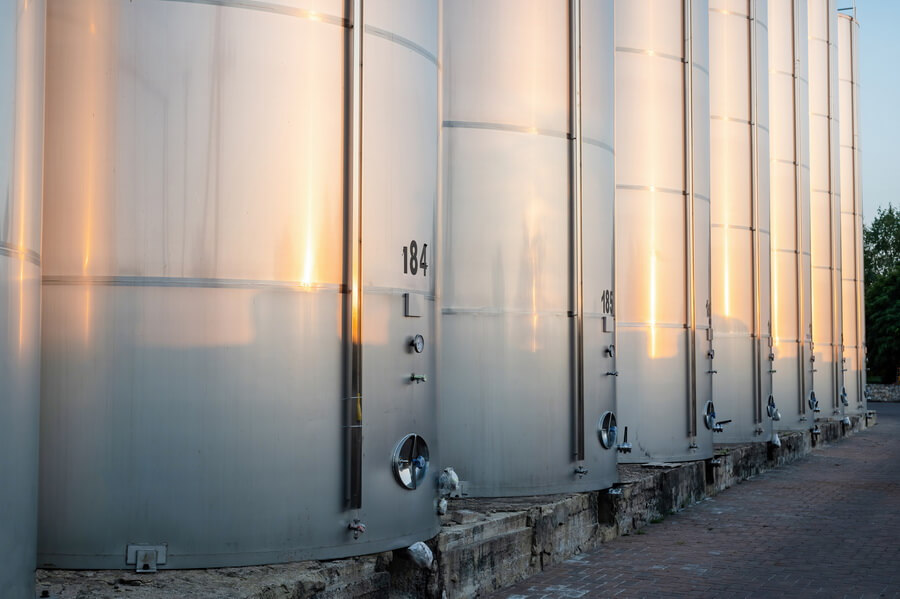
An underground storage tank looks like one asset, but its compliance is a handful of separate clocks running at once, deliberately out of step with each other.
Leak detection has to be checked and recorded on a short cycle, often monthly. Spill and overfill equipment and the lines and tank get tightness-tested on their own schedules. Cathodic protection — the system fighting corrosion on a steel tank — gets tested every few years, with interim checks in between. Someone on site has to hold current operator training. The tank has to stay registered, walkthrough inspections have to be logged, and proof of financial responsibility has to be on file. The tank is compliant only when all of these are current together — and because the intervals are mixed, monthly here and triennial there, it's easy for one to quietly lapse while the others look fine. Miss the wrong one and you're looking at fines, a red tag, or a fuel supplier that won't deliver. Here's how UST compliance works, and how to keep every clock current.
1. What is underground storage tank compliance?
UST compliance is the set of recurring obligations that keep a regulated underground tank — most commonly fuel, but also generator and heating-oil tanks — operating lawfully and without leaks. It's environmental regulation, enforced by the EPA and state agencies, and it applies as a bundle of separate requirements each on its own schedule. Remindax helps you track all of those dates per tank and reminds you before each; it doesn't monitor tanks, perform tests, train operators, or file with regulators.
The thing that makes this awkward to hold on to is that there is no single document at the center of it. Most compliance obligations resolve into an artifact you can point at — a license with a date on it, a permit with a term, a certificate in a frame. A tank has a registration, but the registration is not what compliance means. Compliance is a running condition made out of records you produced last month, a test somebody performed two years ago, a training course a named person completed, and a financial instrument sitting in a file. Asking "is this tank compliant?" is not a question you answer by looking at one thing.
1.1 The recurring obligations
- →Release / leak detection — records kept on a short cycle, often monthly, showing that the method in use is being run and its results reviewed.
- →Spill and overfill prevention, and tightness testing — the equipment that catches a delivery gone wrong, plus the periodic testing of lines and tank, each on its own schedule.
- →Cathodic (corrosion) protection testing — commonly around every three years for the full test, with shorter interim checks in between for some systems.
- →Operator training — designated operators, commonly described as Class A, B, and C, trained to oversee and respond at the site, with training kept current.
- →Registration, walkthrough inspections, and financial responsibility — the tank stays registered, periodic walkthroughs are logged, and proof of financial responsibility is maintained.
Exactly which obligations apply, on what cadence, and under which agency varies by state and by tank system — confirm the specifics for your own equipment with the program that regulates it rather than assuming a single national rule. What holds everywhere is the shape: several requirements, several cadences, one tank, and no partial credit.
Plenty of compliance work involves lots of dated items on mismatched intervals. What sets a tank apart is that the individual clocks don't produce individual verdicts. They produce one.
| Fire safety systems | Trade devices | This page | |
|---|---|---|---|
| What carries the clock | Many systems, one interval each | Many devices, one certification each | One tank, many obligations at once |
| Scope of a lapse | That system | That device | The whole tank |
| Can the rest carry on? | Yes — the sprinklers don't stop | Yes — the other counters keep selling | No — there is no partial state |
A tagged extinguisher leaves the alarm panel untouched. A condemned scale leaves the next counter over trading normally. But a tank whose corrosion protection test is nine months overdue is a non-compliant tank, full stop — even though its leak-detection records are immaculate, its operator training is current, and its registration is in perfect order. Everything you did right is still true. It just doesn't add up to compliance any more.
It's worth separating this from the other environmental dates a facility carries. An air, water, or waste permit is an authorization with a term: it was granted, it runs for a period, and the work is to renew it in time and file what it asks for along the way. A tank has no equivalent term to renew. Its obligations don't expire and get reissued — they simply come around again, and again, for as long as the tank is in the ground. One is a document you keep alive; the other is a condition you keep true.
2. What UST requirements have deadlines?
Short-cycle records, often monthly, for each tank and its piping.
Periodic, on schedules set per item of equipment.
Commonly every ~3 years, with interim checks in between for some systems.
Each on its own clock, independent of the others.
The mismatched intervals are the whole difficulty — monthly, periodic, triennial — so "is this tank compliant?" is really a dozen separate dates that all have to be current at the same time.
And mismatched intervals have a specific failure pattern, which is worth naming because it isn't carelessness. Short-cycle obligations get absorbed into routine: a monthly record becomes something the site simply does, and if it slips, it slips visibly and gets caught within weeks. Long-cycle obligations are the opposite. A test performed every three years has no routine to attach itself to. Nothing about the site changes as its due date approaches, nobody develops a habit around it, and by the time it comes round again the person who arranged it last time may well have moved on. The clocks most likely to be missed are the slow ones, and they are also the ones that take longest to notice.
It's tempting to assume a site's dates can be handled in one annual sweep. In practice they scatter almost immediately. A tightness test brought forward after a repair resets that clock and no other. A tank replaced during a forecourt refit starts fresh while its neighbor keeps the old schedule. An operator leaves and their replacement's training begins on a different day. A site acquired mid-cycle arrives with its own inherited dates, none of which line up with yours. Within a couple of years, what looked like one calendar entry has become a scattered set of individual due dates spread across several tanks and several sites — which is exactly the kind of list a person stops being able to carry and starts needing to look up.
3. Why tracking UST compliance dates matters
The cost of an untracked obligation here is unusually broad, because the paperwork sits on top of an environmental risk and a fuel supply at the same time. It builds in four ways.
The tank is compliant only if everything is current
A single lapsed test, training, or record can put the whole tank out of compliance, even if everything else is fine.
The intervals are deliberately mismatched
Monthly leak checks, periodic tightness tests, triennial corrosion protection — different clocks that are easy to lose track of together.
The stakes are environmental and operational
Lapses can mean fines, a notice of violation, a red tag — and if a leak goes undetected, serious environmental liability.
Suppliers may refuse a non-compliant tank
Fuel suppliers can decline to deliver to a tank that isn't in compliance, turning a paperwork gap into a supply problem.
What links the four is that nobody at the site is naturally assigned to this. The equipment belongs to operations, the testing is arranged by whichever contractor was called last time, the training belongs to whoever happened to sit the course, and the consequence lands on a site manager who was never told there was a date. Multiply that across a portfolio and the pattern becomes visible: head office holds no register of which tank is due for what, each site assumes the last contractor visit covered everything, and the first anyone hears of a problem is an inspector asking to see a record that doesn't exist.
4. Who needs to track UST compliance dates
Five kinds of operation carry these dates most often, and each one meets the problem from a different side of the site:

Gas stations & fuel retailers
Every tank's testing, training, and registration dates — on a site where the fuel that pays the bills is sitting directly under the paperwork.
Learn More
C-store & fuel chains
Tank compliance across many sites — where the same obligation exists forty times over, on forty separate schedules nobody can recite.

Fleet fueling depots
On-site tanks fueling the fleet — regulated exactly like a retail site, but easy to think of as equipment rather than as a compliance obligation.
Learn More
Facilities with generator or heating-oil tanks
Regulated tanks well beyond fuel retail — a hospital's standby generator supply or an older building's heating oil, sitting quietly outside anyone's compliance calendar.
Learn More
Environmental & H&S managers
The tank calendar across the portfolio — the only vantage point from which every site's status is a single question rather than a round of phone calls.
Learn MoreIn every one of them the tank sits underneath a stack of other dated obligations the site already carries — the operating approvals tracked through permit tracking software, the fire and building inspections on the structure above, and the equipment certifications on the forecourt. What makes the tank distinctive is that it's the one obligation nobody can see. Everything else that needs a date is visible to somebody walking the site. The tank is a shape on a plan and a fill point in the concrete, and it is entirely possible for a site to be run competently for years by people who have never once thought about it as a thing with a calendar.
5. What happens when a UST requirement lapses
UST compliance fails the way any multi-part obligation fails — one clock slips while the rest look healthy — but the consequences here are unusually serious because the underlying risk is a fuel leak into soil and groundwater. When a required test, training, or record lapses, the tank is out of compliance regardless of how well the other requirements are kept, and an inspection can result in fines and a notice of violation. In more serious cases a tank can be red-tagged and taken out of service until the issue is corrected, which for a fuel retailer means tanks that can't dispense.
Fuel suppliers, wary of their own liability, may also decline to deliver to a tank that isn't demonstrably in compliance — so a missed corrosion-protection test can quietly become an empty forecourt. And if a release occurs while leak detection wasn't being properly performed or recorded, the environmental and financial exposure can be severe. Because the requirements run on mismatched schedules, the lapse is almost always a single overlooked date. Tracking every tank's obligations on their separate clocks is what keeps the whole tank compliant and the fuel flowing.
Most overdue compliance dates are recoverable in one phone call. An inspection that should have happened in March can happen in June: you book the visit you missed, the work gets done, the paperwork catches up, and what remains is an awkward gap in a file rather than a permanent hole. That's true of the building inspections, the equipment certifications, and the periodic tests on this list too — an overdue tightness or corrosion-protection test is a booking problem, and booking problems can be solved.
Leak detection is not that. You cannot go back and perform last month's leak detection, because the thing being recorded was a condition of the tank during a month that has now passed. A missed month stays missed, permanently, and no amount of catching up afterwards will produce it. That matters far beyond the tidiness of a file: if a release is later discovered, the question asked will be how long it had been going on and whether the required monitoring was actually being performed — and the missing months are precisely the ones you will be asked about. It is the one obligation on this page where being late and being non-compliant are the same event, with no way back.
A tag on an overdue extinguisher or sprinkler valve marks equipment you can no longer rely on — the exposure runs to occupancy and insurance, and it's the subject of fire safety inspection tracking. A tag on a scale or a pump marks equipment you're no longer permitted to trade through, which is the subject of weights and measures certification tracking — nothing becomes less safe, the counter simply stops taking money.
A tank out of compliance is a third thing again, and the difference is who acts. The other two tags are applied by an official who has been to your site. Here, the most immediate consequence often arrives without any enforcement at all: a supplier reviews your compliance status, decides it doesn't want the liability, and declines the next delivery. No inspector has visited, no tag has been applied, and the site is still perfectly legally open — it just has nothing left to sell once the tanks run down. One failure is measured in risk, one in receipts, and this one in a delivery that doesn't come.
6. How Remindax keeps every tank compliant
Remindax is built for exactly this shape of obligation — many dates, on different cadences, attached to individual assets, spread across sites. It sits inside the wider register of dated requirements a business carries in compliance tracking software, alongside the environmental and operating approvals a facility already holds. Four pieces work together:
Every tank's obligations in one dashboard
Leak detection, tightness, spill and overfill, corrosion protection, operator training, registration, and inspections — held per tank and per site. Pairs with the Locations asset profiles, so a tank lives where it physically sits.
Reminders on every cadence
Staged alerts before each monthly, periodic, and triennial obligation comes due, by Email, SMS, and WhatsApp — to the site and head office together, so a slow clock has more than one person watching it.
Multi-site, multi-tank view
Every tank across every location tracked together, so a chain's compliance status is one screen rather than a round of calls to site managers who each know only their own.
Audit-ready records
Export a tank's compliance status for an inspector, an insurer, or head office, with a history of when each date was due and who was reminded about it.
Remindax tracks the dates and reminds you — it doesn't monitor tanks, perform tests, train operators, or file with regulators, and it isn't a tank-monitoring system, an automatic tank gauging product, or an environmental management platform. Monitoring comes from your equipment, testing and inspection from your service providers, training from an approved program, and filings from you or your consultant. Remindax makes sure the moment to involve them never passes unnoticed.
7. Why spreadsheets fail for UST compliance tracking
A tank is a dozen mismatched clocks, and a spreadsheet is exactly the wrong tool for mismatched clocks — it shows a static grid, not what's due next. It won't distinguish the monthly leak-detection record from the triennial corrosion-protection test, won't warn you before any single one comes due, and won't roll a chain's tanks into one reliable view. Given that a lapse can bring fines, a red tag, a halted fuel supply, or real environmental liability, the one date that slips is a costly one. An automated system holds every tank's obligations on their separate cadences and reminds the right people before each — so the whole tank stays compliant, not just the requirement someone happened to remember.
There's a second, structural reason a file struggles here. A spreadsheet is only ever as current as the last person who opened it, and the obligations most likely to be missed are the ones nobody has a reason to open it for. A monthly record keeps the file in view; a three-year test doesn't. So the row that matters most is the row least likely to have been touched — and its most dangerous state isn't being blank. It's being filled in with a date from a contractor visit two cycles ago that everybody still trusts.
- ✗Treats a monthly record and a triennial test as the same kind of row
- ✗No warning before any single obligation falls due
- ✗Can't show a chain's tanks as one compliance picture
- ✗Goes stale as tanks are replaced, sites acquired, operators change
- ✗The missed date is discovered by an inspector, or a supplier
- ✓Each obligation carries its own cadence and its own alerts
- ✓Staged reminders before every monthly, periodic, and multi-year date
- ✓Every tank on every site in a single multi-location view
- ✓Records held per location, so a tank is filed where it sits
- ✓Reminders by Email, SMS, and WhatsApp to site and head office
8. Key takeaways
- ✓UST compliance is a bundle of recurring environmental obligations per tank, each on its own schedule.
- ✓It spans leak detection, tightness and spill/overfill testing, cathodic protection, operator training, registration, and inspections.
- ✓The intervals are deliberately mismatched — monthly, periodic, triennial — so one is easy to lose track of.
- ✓A single lapse can mean fines, a red tag, halted fuel deliveries, or environmental liability if a leak goes undetected.
- ✓Tracking every tank's obligations on their separate clocks keeps the whole tank compliant.
Never let a single tank date slip
Track every UST's testing, training, and registration — automatically. Whether it's one depot tank or a chain of forecourts, Remindax holds each obligation on its own cadence and reminds the right people while there's still time to book.
GDPR-ready · AWS secure cloud · Encrypted storage · Setup in under 5 minutes
9. Frequently Asked Questions
Leak detection (often monthly records), tightness and spill/overfill testing, cathodic protection (commonly every ~3 years), operator training, registration, walkthrough inspections, and financial responsibility - each on its own schedule.
Commonly every three years, with interim checks in between, though specifics vary by EPA and state rules.
Designated operators (commonly Class A, B, and C) must be trained to oversee the tank system, with training kept current per the rules.
The tank can be out of compliance, leading to fines, a notice of violation, and in serious cases a red tag out of service - plus environmental liability if a leak goes undetected.
No - the record describes the tank during a month that has already passed, so a missed month stays missing. Overdue tests can be booked and performed late; leak detection cannot be performed retroactively.
Yes - suppliers may decline to deliver to a tank that is not demonstrably in compliance, turning a paperwork lapse into a supply problem.
No - Remindax tracks the testing, training, and registration dates and reminds you. Monitoring, testing, and training are done by your equipment and service providers.
Yes - each tank's obligations per location in one place, each on its own cadence with its own reminders.
Yes - a forever-free plan, no credit card required.